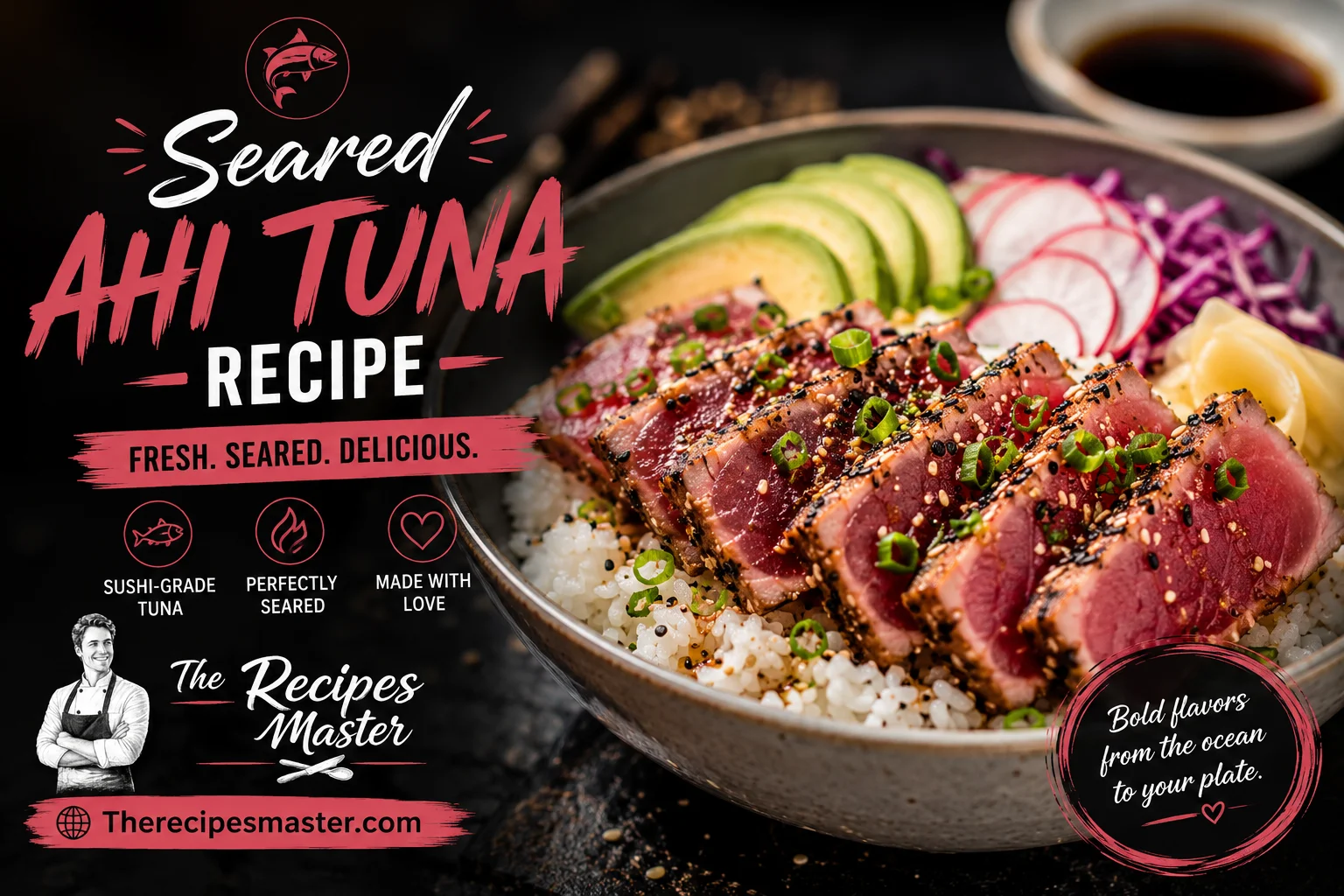
Ahi Tuna Recipe – Easy Seared Tuna in 10 Minutes
If you have ever paid twenty dollars for seared tuna at a restaurant and thought, “I could probably make this at home,” you are right. You can. This ahi tuna recipe gives you the same crisp, golden crust and rare, buttery center in about ten minutes, using one pan and a handful of pantry staples.
I used to be scared of cooking tuna. The fish is not cheap, and the idea of serving something raw in the middle felt risky. Then a fishmonger walked me through what to look for, how hot the pan really needs to be, and why a raw center is actually the goal, not a mistake. Once I understood the “why” behind each step, my tuna went from dry and gray to something that looked like it came out of a sushi restaurant kitchen.
This guide covers everything: how to pick the right tuna, how to know it is safe to eat rare, exactly how long to sear it, and what to do if something goes wrong. By the end, you will have a full ahi tuna recipe you can repeat any night of the week, plus the knowledge to make smart choices at the fish counter.
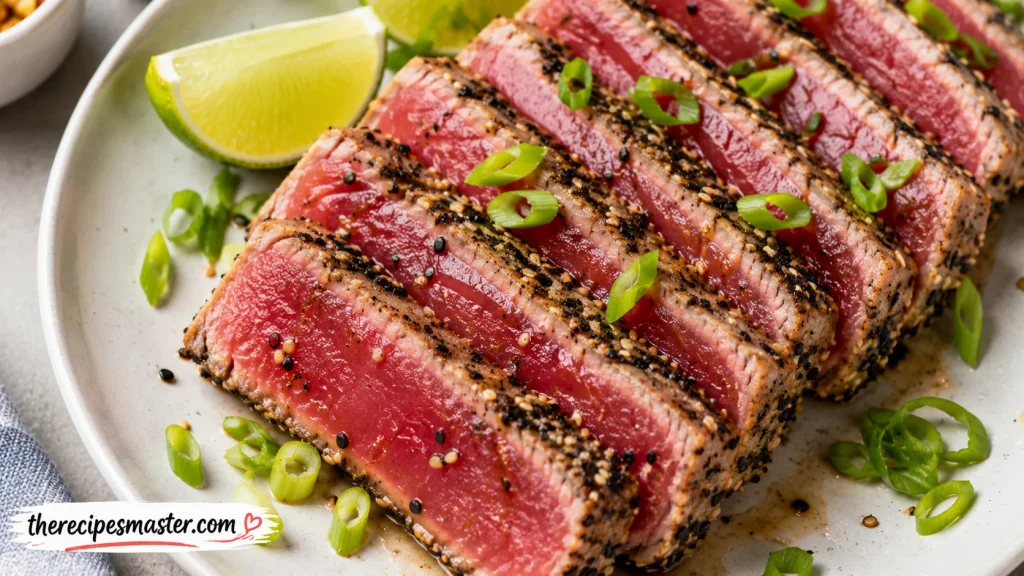
What Is Ahi Tuna? (Yellowfin, Bigeye, and the Hawaiian Meaning of “Ahi”)
Ahi tuna is the name used for two types of tuna: yellowfin and bigeye. In Hawaii, “ahi” means fire, and old-timers say the name came from the way the fish’s fins caught the light like flames when it was hauled onto the boat.
Ahi has a mild, clean taste. It is not fishy the way some other seafood can be. The texture is firm and meaty, closer to a good cut of beef than to flaky white fish. That firm texture is exactly why it holds up so well to a hot sear.
Why It’s Called “Ahi” (The Hawaiian Meaning)
The word ahi comes from the Hawaiian language, and it simply means fire. Fishermen in Hawaii have used this name for generations, long before ahi tuna became popular on mainland menus. When you see “ahi” on a menu today, it almost always refers to yellowfin or bigeye tuna.
Yellowfin vs. Bigeye — Are They the Same Thing?
Yellowfin and bigeye are two different species, but both are sold under the ahi name. Yellowfin is the one you will find most often at the grocery store. It has a bright red color and a slightly milder taste. Bigeye is a little fattier, with a richer flavor, and it is often considered the better fish for sashimi.
For a home ahi tuna recipe like this one, either species works great. If you see both at the counter and the price is close, bigeye is worth trying for a slightly richer bite.
Ahi Tuna Species Comparison Table
Not all tuna is the same, and knowing the difference helps you buy smarter and cook with more confidence.
| Species | Flavor | Fat Content | Typical Price | Best Use | Mercury Level |
|---|---|---|---|---|---|
| Yellowfin (Ahi) | Mild, clean | Low to medium | $$ | Searing, poke, grilling | Moderate |
| Bigeye (Ahi) | Rich, buttery | Medium to high | $$$ | Sashimi, searing | Moderate to high |
| Bluefin | Very rich, fatty | High | $$$$ | Premium sashimi | High |
| Albacore | Very mild, light | Low | $ | Canned, mild dishes | Lower |
| Skipjack | Bold, strong | Medium | $ | Canned tuna, cooked dishes | Lowest |
If a recipe just says “tuna steak” without naming the species, it is almost always yellowfin.
How to Buy the Best Ahi Tuna (Buying Checklist)
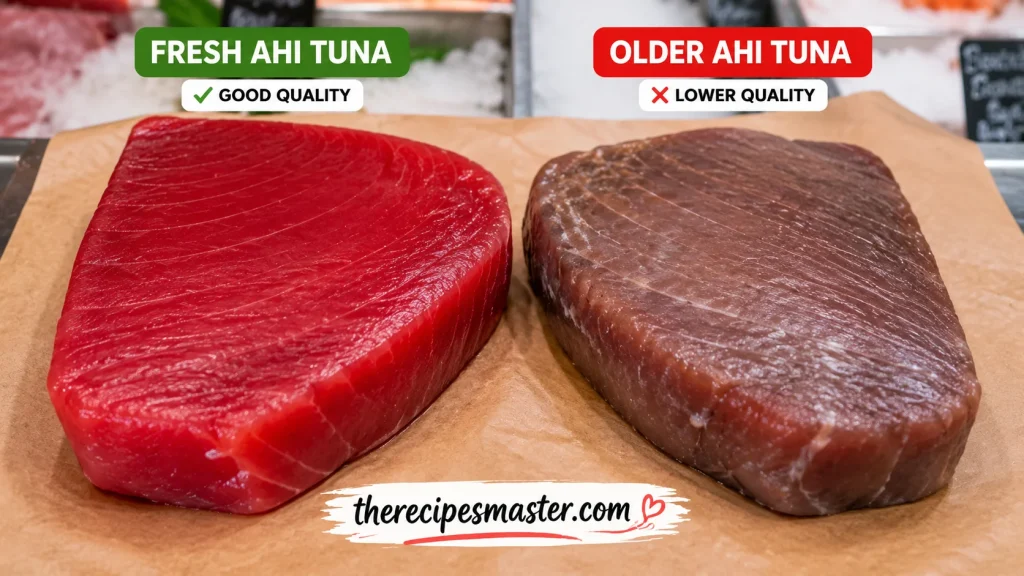
Good tuna makes this ahi tuna recipe almost impossible to mess up. Bad tuna will taste off no matter how well you cook it. Here is what to check before you buy.
What “Sushi-Grade” or “Sashimi-Grade” Actually Means
This one surprises people. “Sushi-grade” is not an official government label. There is no legal standard that forces a store to prove a fish meets some fixed grade before slapping that word on the package. It is really a promise from the seller that the fish has been handled and frozen in a way that makes it safe to eat raw.
That means the label is only as good as the store behind it. Buy your fish from a place you trust, like a fish counter that also sells sushi, a reputable seafood market, or a well-reviewed online seafood delivery service.
Color, Texture, and Smell — What to Look For
The CO (Carbon Monoxide) Color Trick to Watch For
Some packaged tuna is treated with carbon monoxide gas to keep it looking bright red for longer, even after it has started to age. This trick does not make the fish unsafe by itself, but it can trick your eyes into thinking older fish is fresher than it really is. If you are buying pre-packaged tuna, check the label or ask the counter staff whether the fish has been treated this way.
Fresh vs. Frozen vs. “Saku Block” — Which Should You Buy?
Fresh tuna sounds better on paper, but that is not always true. Tuna that has been flash-frozen at very low temperatures right after being caught can actually be safer for eating rare, because deep freezing kills off parasites that might be in the flesh.
A “saku block” is a rectangular, boneless, skinless cut of frozen tuna, usually sold vacuum-sealed. It is the same tuna used at sushi counters, and it is one of the easiest ways for a home cook to get sushi-quality fish without a trip to a specialty market. If your grocery store has an in-house sushi counter, ask if they sell saku blocks. Many will.
Is It Safe to Eat Ahi Tuna Raw or Rare?
This is the question most people actually want answered before they even start cooking, so let’s answer it directly.
Yes, ahi tuna is safe to eat raw or rare when it has been properly sourced and frozen, though certain groups should avoid it or stick to fully cooked tuna.
The Parasite Question — What Freezing Standards Actually Require
Raw fish carries a small risk of parasites. Freezing kills them. The FDA’s food code recommends freezing fish at -4°F (-20°C) or below for at least 7 days, or at -31°F (-35°C) for 15 hours, to destroy parasites before the fish is eaten raw. This is exactly why so much “sushi-grade” tuna has been frozen at some point, even if it looks fresh at the counter.
Tuna also naturally carries a lower parasite risk compared to some other fish, like salmon, which is part of why it shows up so often on raw and rare menus.
Who Should Avoid Raw or Rare Tuna
A few groups should skip raw or rare tuna and stick to fully cooked ahi tuna recipes instead:
If you fall into one of these groups, you can still enjoy this same recipe. Just sear the tuna longer on each side, until it is cooked through, instead of leaving the center rare. The flavor changes a little, but it is still good.
This is general food safety information, not medical advice. If you are pregnant or have a health condition, check with your doctor about seafood choices.
Mercury in Ahi Tuna — How Much Is Too Much?
Ahi tuna has a moderate mercury level, higher than canned light tuna but lower than bluefin or swordfish. The FDA and EPA suggest most adults can safely eat 2 to 3 servings (about 4 ounces each) of moderate-mercury fish like ahi per week. Pregnant women and young children are usually told to limit this further, closer to one serving a week, and to check current FDA/EPA seafood guidance for exact numbers since advice can change over time.
Why You’ll Love This Ahi Tuna Recipe
Seared Ahi Tuna Recipe (Ingredients and Method)
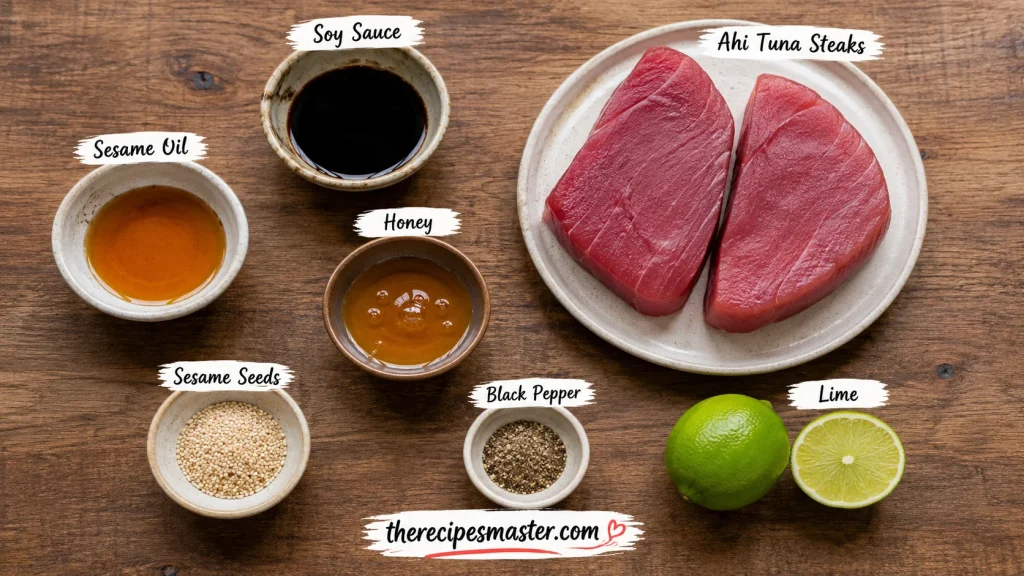
Ingredients (With Substitution Notes)
Ingredient Notes
Thicker steaks (over an inch) are easier for beginners because they give you more room for a raw center without the crust taking over the whole steak. If your tuna is thinner, cut your sear time down so you do not accidentally cook it all the way through.
Toasted sesame oil has a much stronger flavor than plain sesame oil, so a little goes a long way. Do not swap in a full tablespoon of a different oil for it, or the marinade will taste flat.
Equipment You Need (and What Works If You Don’t Have Cast Iron)
If you do not own cast iron, do not worry. A heavy stainless steel skillet gets just as hot and works fine. Just avoid thin, cheap pans, since they lose heat fast and will not give you a good crust.
Step-by-Step Instructions
Pro Tips for a Crust That Doesn’t Fall Off
Ahi Tuna Doneness Chart (Time, Temperature, and Visual Cues)
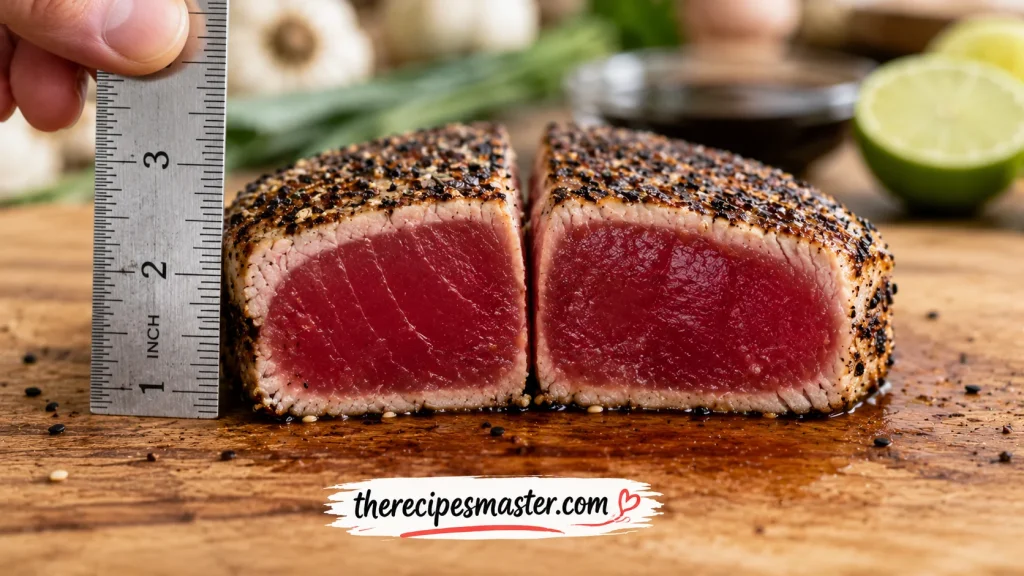
| Doneness | Time Per Side (1-inch steak) | Internal Temp | Visual Cue |
|---|---|---|---|
| Rare | 30-45 seconds | 110-115°F | Thin cooked band, deep red center |
| Medium-Rare | 45-60 seconds | 120-125°F | Slightly thicker band, rosy pink center |
| Medium | 60-90 seconds | 130-135°F | Pink throughout, no red center |
| Well-Done | 2-3 minutes | 145°F+ | Cooked through, light tan color |
The “Side-View Test” — How to Check Doneness Without a Thermometer
Look at the side of the tuna steak while it cooks. You will see a thin cooked line climbing up from the bottom of the fish as it sears. For rare, you want that line to stay thin, maybe a quarter inch deep, with the rest still deep red. For medium-rare, let that band grow a little thicker before you flip. This trick works even if you do not own a thermometer.
5 Ways to Cook Ahi Tuna (Beyond Pan-Searing)
This ahi tuna recipe is written for the stovetop, but the same marinade and seasoning work with other cooking methods too. Here is how each one changes the result.
Grilled Ahi Tuna
Heat your grill as hot as it will go. Oil the grates so the fish does not stick. Grill the marinated steaks for 45 to 60 seconds per side over direct high heat. Grilling adds a smoky flavor that pan-searing cannot match, but it is easier to overcook, so watch it closely.
Broiled Ahi Tuna
Set your oven to broil and place the tuna on a lined tray about 4 inches from the heat source. Broil for 2 to 3 minutes total, flipping once halfway. This method works well if you do not want to deal with pan splatter.
Baked Ahi Tuna
For a fully cooked, low-mess option, bake seasoned tuna steaks at 400°F for 8 to 10 minutes, depending on thickness. This is a good choice if you are cooking for someone who should avoid rare fish.
Poached Ahi Tuna
Simmer tuna gently in a broth, citrus juice, or a light sauce for 3 to 4 minutes, until the outside turns opaque but the center stays soft. Poaching keeps the fish extra moist and works well with lighter, brighter flavors like lime and ginger.
Blackened Ahi Tuna
Coat the tuna in a spice mix of paprika, cayenne, garlic powder, and black pepper instead of the sesame crust. Sear in butter or oil for 60 to 90 seconds per side. This version brings heat and a bold, Cajun-style flavor that pairs really well with a cooling sauce.
Marinade and Sauce Variations
One of the best things about this recipe is how easy it is to change the flavor without changing the technique.
Classic Soy-Sesame-Honey Marinade
This is the base version used above. Salty, slightly sweet, and simple.
Ginger-Shoyu Marinade
Mix 2 tablespoons shoyu (Japanese soy sauce), 1 teaspoon rice vinegar, 1 tablespoon grated ginger, and half a teaspoon of sugar. This version has a brighter, sharper taste.
Wasabi and Citrus Rub
Skip the marinade and instead rub the tuna with a thin layer of wasabi paste and fresh lime zest before pressing on the sesame seeds. This gives you heat and citrus in every bite.
Sauces to Serve On the Side
What to Serve with Seared Ahi Tuna
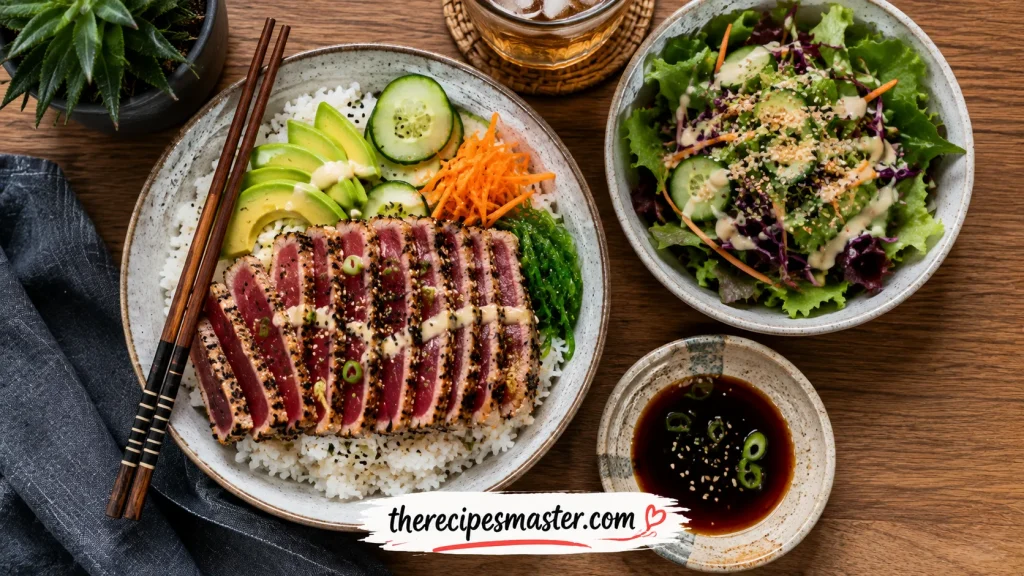
Rice Bowls and Poke-Style Plates
Serve sliced tuna over warm sushi rice with cucumber, avocado, edamame, and a drizzle of spicy mayo for a poke-bowl style dinner.
Salads
Lay the sliced tuna over mixed greens with shredded carrots, cabbage, and a sesame-ginger dressing for a light, low-carb meal.
Tacos, Wraps, and Sandwiches
Tuck slices into a warm tortilla with slaw and spicy mayo, or roll into a wrap with greens and rice for a quick lunch.
Appetizer or Party Platter Ideas
Arrange the sliced tuna on a platter with the ponzu and wasabi mayo on the side for dipping. This is one of the fastest impressive appetizers you can put together for guests.
Common Mistakes and Troubleshooting
| Problem | Likely Cause | Fix |
|---|---|---|
| Center is fully cooked, not rare | Pan not hot enough, or seared too long | Get the pan smoking hot before adding fish; cut sear time |
| Crust falls off in the pan | Fish was wet, or seeds were not pressed on firmly | Pat the fish very dry; press seeds in with your palm |
| Tuna tastes fishy | Fish was not fresh, or was stored too long | Buy from a trusted source; cook the same day if possible |
| Fish sticks to the pan | Pan was not hot enough, or not enough oil | Preheat fully; use enough high-heat oil to coat the pan |
| Uneven sear | Steaks were different thicknesses, or pan was crowded | Buy similar-sized steaks; cook one or two at a time |
| Tuna is dry | Overcooked past medium | Pull it earlier; rare and medium-rare stay the juiciest |
Storage, Leftovers, and Meal Prep
How Long Does Cooked Ahi Tuna Last?
Store leftover seared tuna in an airtight container in the fridge for up to 2 days. Since the center is still rare, it does not keep as long as a fully cooked piece of fish would.
Can You Refreeze Thawed Ahi Tuna?
It is best to avoid refreezing tuna that has already been thawed, since this can affect both texture and safety. If you know you will not use it right away, only thaw the amount you plan to cook.
Best Way to Reheat (or Serve Cold) Leftover Tuna
Leftover seared tuna is actually great served cold, straight from the fridge, over a salad or rice bowl the next day. If you want it warm, a quick 20 to 30 second reheat in a pan on low heat works, but avoid the microwave, since it will overcook the center fast and make the texture rubbery.
Nutrition Facts (Per Serving)
One 6-ounce serving of this seared ahi tuna, made with the classic marinade, comes out to roughly:
Ahi tuna is a lean, high-protein food, and it is one of the better seafood sources of omega-3 fats and B12, both of which support heart and brain health.
Quick Recipe Card
Seared Ahi Tuna Recipe
Crisp sesame crust outside, rare and buttery inside. Ready in 10 minutes with one pan.
Ingredients
- 2 ahi tuna steaks (6 oz each, 1-1.5 inch thick)
- 3 tbsp soy sauce
- 1 tbsp toasted sesame oil
- 1 tbsp honey
- 1 clove garlic, minced
- 1 tsp fresh grated ginger
- 1/4 cup sesame seeds (white and black)
- 1/2 tsp salt
- 1/4 tsp black pepper
- 1 tbsp avocado oil, for searing
- Green onion, lime wedges, extra sesame seeds, for serving
Instructions
- Pat the tuna steaks completely dry with paper towels.
- Whisk soy sauce, sesame oil, honey, garlic, and ginger together in a small bowl.
- Marinate the tuna in this mix for 10 minutes at room temperature.
- Lift tuna out of the marinade and press each side firmly into the sesame seeds.
- Heat a pan over high heat for 2-3 minutes until very hot. Add avocado oil.
- Sear tuna 30-45 seconds per side for rare, 45-60 seconds for medium-rare. Sear the edges 10 seconds each using tongs.
- Rest 1 minute, then slice thinly with a sharp knife.
- Garnish with green onion, sesame seeds, and a squeeze of lime. Serve right away.
Notes
Frequently Asked Questions
Final Thoughts
This ahi tuna recipe gives you a full picture, not just a list of steps. You now know how to pick good tuna, why a hot pan matters more than anything else, how to check doneness without guessing, and what to do if your first try does not come out perfect. Cooking tuna at home stops feeling risky once you understand what is actually happening in the pan.
Next Steps
Try pairing this recipe with a homemade poke bowl, a simple Asian cucumber salad, or a batch of sushi rice. If you enjoyed this ahi tuna recipe, you might also like exploring other quick seafood dinners, a homemade ponzu sauce recipe, or a guide to picking sushi-grade fish for other dishes.
Craving more seafood? These smoked salmon recipes make a delicious sandwich filling too. For an elegant starter, try this shrimp cocktail recipe before your meal.