Chicken Cutlet Recipe (Crispy, Juicy, and Easy 3 Ways to Cook)
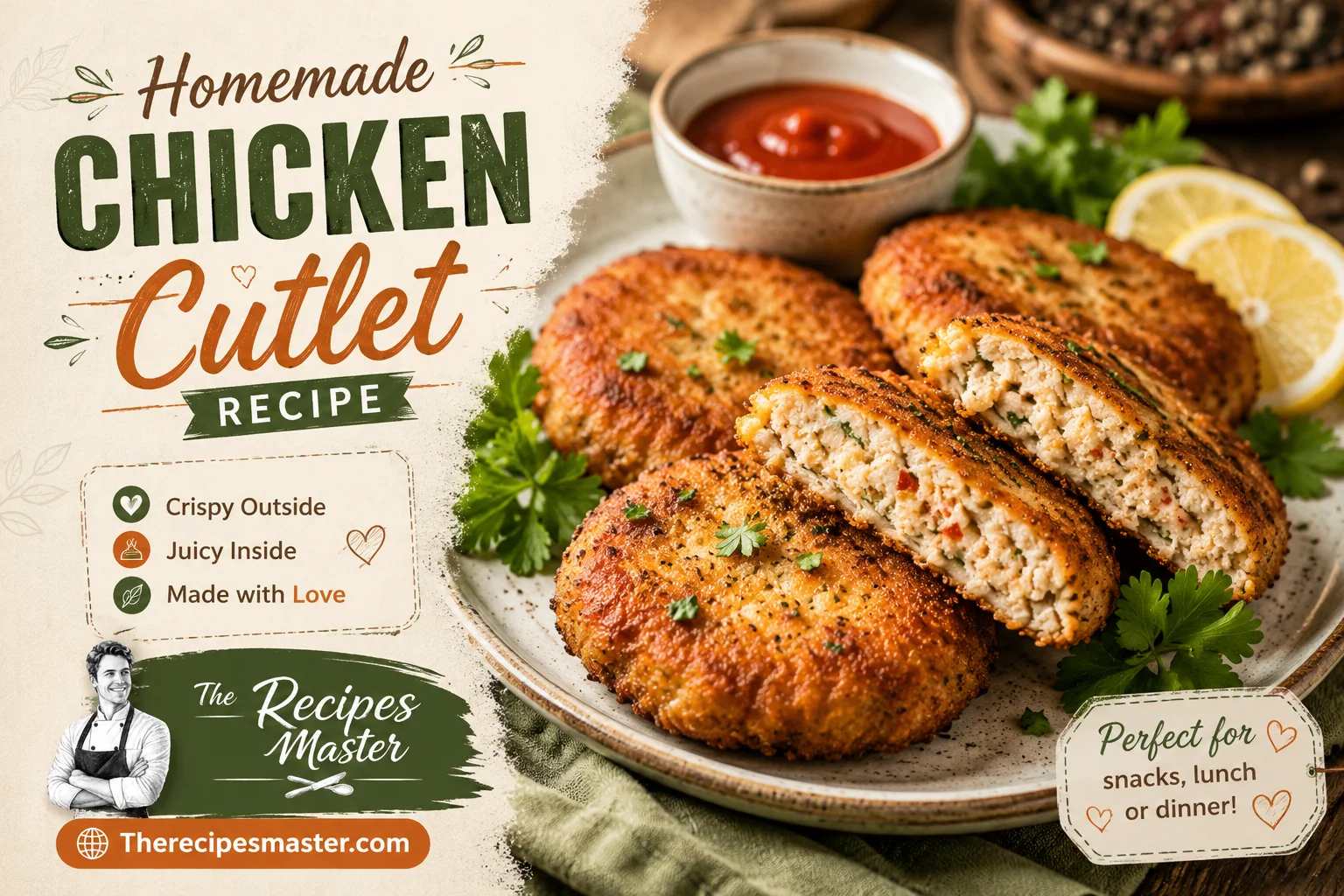
A chicken cutlet is a thin, boneless piece of chicken breast that gets coated in a crunchy breading and cooked until golden. This chicken cutlet recipe shows you how to cut your own cutlets from a whole chicken breast, bread them the right way, and cook them three different ways so you never end up with soggy or dry chicken again.
I have made this dish more times than I can count, for weeknight dinners, for sandwiches, and even for a big Sunday lunch with family. Every time, the same three things matter most: how thin you pound the chicken, how you build the breading, and how hot your oil or air fryer is before the chicken goes in. Get those three things right and the rest is easy.
This is not just another basic recipe post. You will learn how to cut the chicken yourself, why each step in the breading works the way it does, and exactly what to do when something goes wrong. If your breading keeps falling off or your chicken always comes out dry, the fix is probably here.
Why You’ll Love This Chicken Cutlet Recipe
Why You’ll Love This Chicken Cutlet Recipe
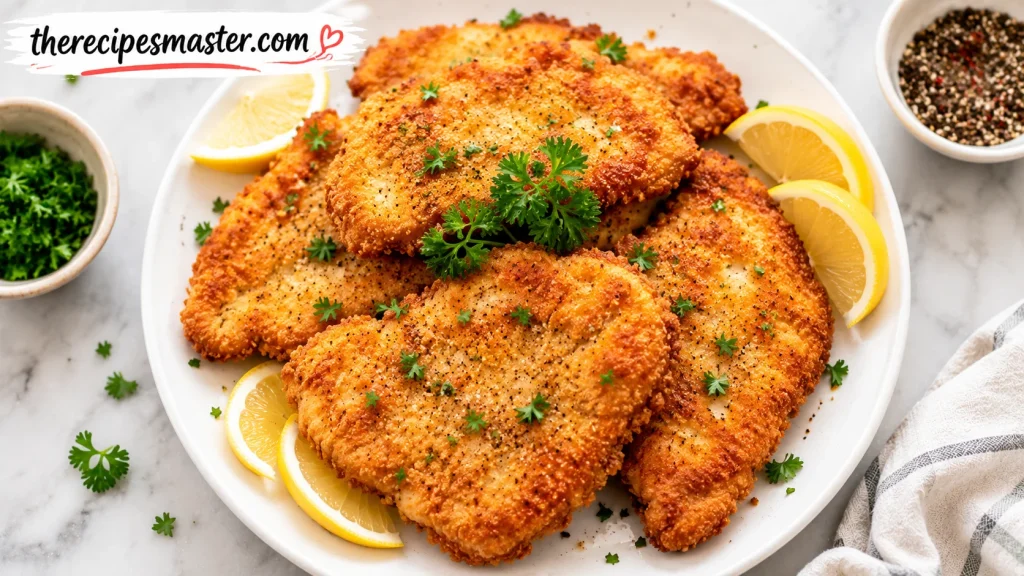
A chicken cutlet is a boneless, skinless piece of chicken breast that has been sliced thin and pounded to an even thickness. The thin, even shape means it cooks fast and stays juicy instead of drying out like a thick whole breast often does.
People use the word “cutlet” loosely, so it helps to know how it is different from a few similar cuts.
Chicken Cutlet vs Scallopini vs Schnitzel vs Tenders
| Cut | What It Is | Typical Thickness | Best For |
|---|---|---|---|
| Chicken Cutlet | Chicken breast sliced and pounded thin | 1/4 to 1/2 inch | Breading and pan-frying, sandwiches |
| Chicken Scallopini | Same cutting method, usually smaller and thinner pieces | 1/8 to 1/4 inch | Light sauces like piccata or marsala |
| Chicken Schnitzel | A breaded, fried cutlet (German/Austrian style) | 1/4 inch | Same basic idea as a breaded cutlet |
| Chicken Tenders | The natural tenderloin strip under the breast | Whole strip, not sliced | Quick frying, no pounding needed |
A schnitzel is really just a breaded cutlet by another name. Scallopini is usually a smaller, thinner cut used more for sauced dishes than breading. Tenders are a different muscle entirely, so they need no slicing or pounding at all.
Ingredients You’ll Need
Ingredient Notes
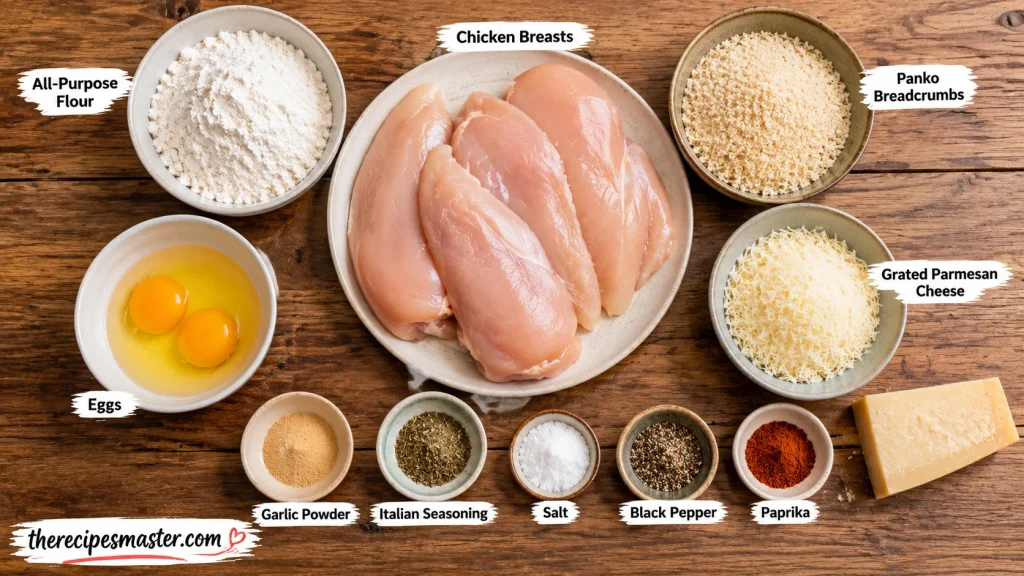
Chicken: Start with whole boneless breasts and slice your own cutlets. You get better portion sizes and it costs less than buying pre-cut cutlets. If you are short on time, store-bought thin-sliced chicken breast works too.
Breadcrumbs: Panko gives the crunchiest texture because the crumbs are larger and lighter. Regular or Italian breadcrumbs give a tighter, finer crust. Either one works, so pick based on the crunch level you want.
Cheese: Parmesan or Pecorino Romano in the breading adds a salty, savory flavor and helps the crust turn extra golden. Skip it if you want a dairy-free version.
Oil: Olive oil adds flavor but has a lower smoke point than avocado or vegetable oil. If you want a more neutral taste or a higher frying temperature, use avocado or vegetable oil instead.
Equipment
How to Cut Chicken Breast Into Cutlets (Step by Step)
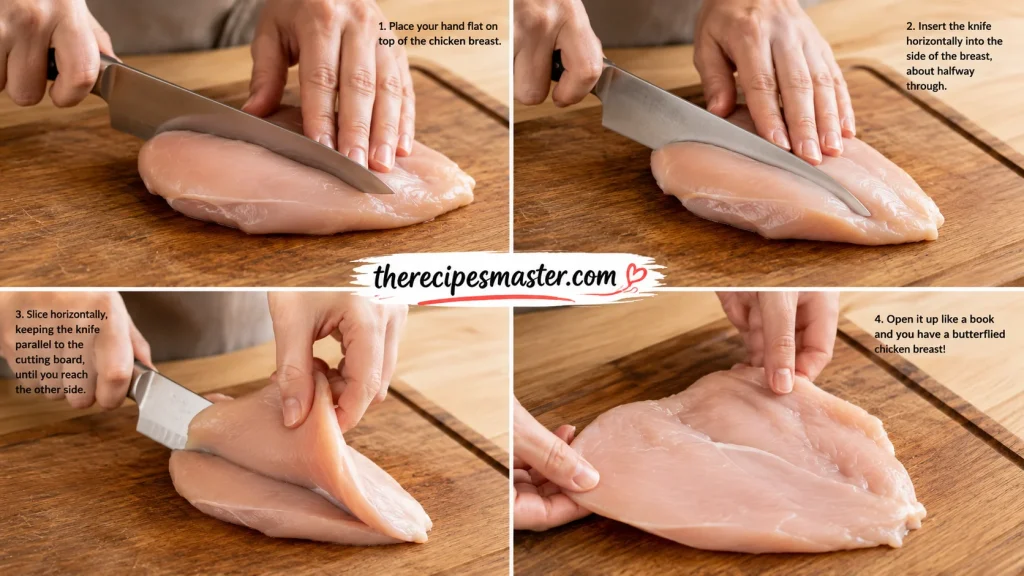
If you already have thin-sliced chicken breast, skip ahead. If not, here is how to make your own cutlets from a whole breast.
Why Pounding Matters
Even after slicing, chicken breasts are rarely the same thickness all the way through. Pounding them flat solves this. Place each piece between two sheets of plastic wrap and use a meat mallet to pound it to about 1/4 to 1/2 inch thick.
An even thickness means the whole cutlet cooks at the same speed. Without pounding, the thick parts stay raw while the thin edges dry out or burn. This one step is the biggest difference between a great chicken cutlet recipe and a mediocre one.
How to Bread Chicken Cutlets (The 3-Station Method)
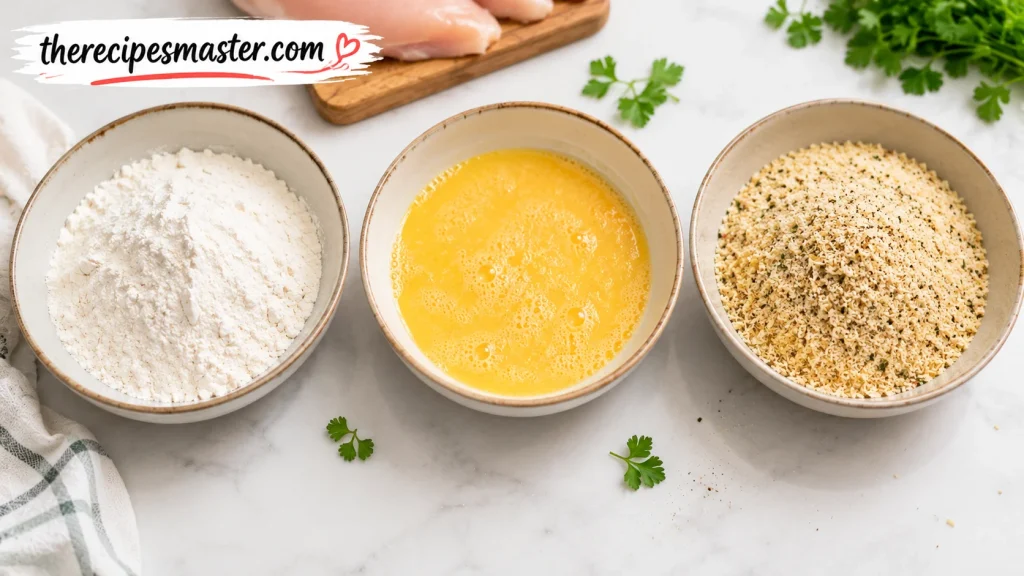
Set up three shallow bowls in a row:
Steps:
Why the Flour, Egg, Breadcrumb Order Works
Each layer has a job. The flour gives the wet egg something dry to grip onto, since egg alone slides right off smooth chicken. The egg then acts like glue, giving the breadcrumbs something sticky to bond with. The breadcrumbs are the final crunchy shell.
Skip the flour and the egg has nothing to hold onto. Skip the egg and the breadcrumbs have nothing to stick to. All three layers work together, and missing even one is the most common reason breading falls off.
The Resting Trick That Fixes Falling-Off Breading
After breading all your cutlets, let them sit in the fridge, uncovered, for 20 to 30 minutes before cooking. This short rest lets the coating dry out slightly and bond to the chicken. Skipping this step is one of the biggest reasons people lose their breading in the pan.
How to Cook Chicken Cutlets: 3 Methods
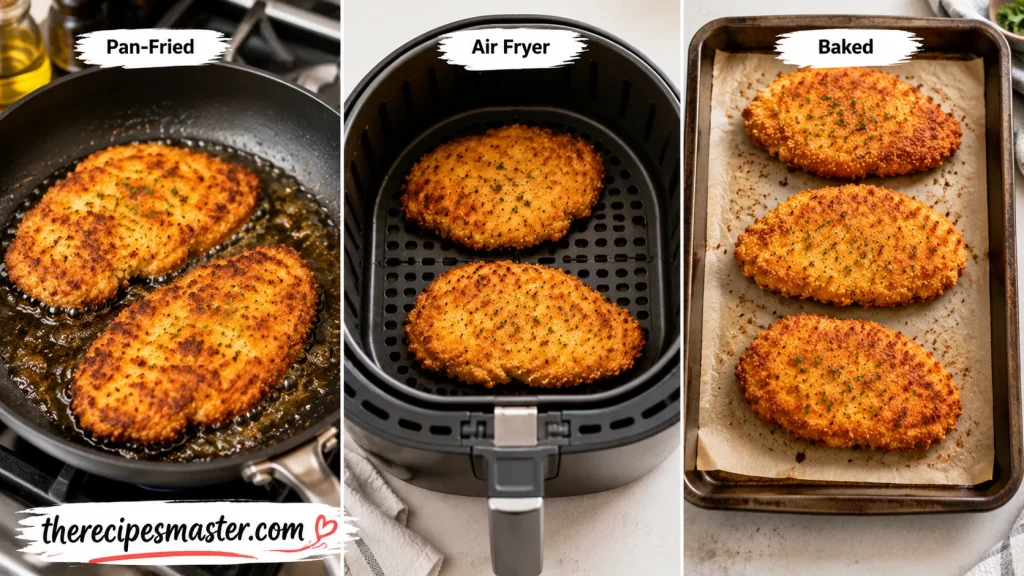
You can cook a chicken cutlet recipe three different ways, depending on how much time you have and how crispy you want the result.
Method 1: Pan-Frying (Classic and Crispiest)
Method 2: Air Fryer (Lighter, Less Mess)
Method 3: Oven-Baked (Hands-Off)
Which Cooking Method Should You Pick?
| Method | Time | Texture | Best For |
|---|---|---|---|
| Pan-Fry | 6 to 8 minutes | Crispiest, most golden | Best flavor and texture |
| Air Fryer | 10 to 12 minutes | Very crispy, less oily | Weeknights, less mess and cleanup |
| Oven-Baked | 18 to 20 minutes | Good crunch, hands-off | Cooking a big batch at once |
If you want the crispiest possible result, pan-frying wins. If you want something lighter with less cleanup, the air fryer is your best bet. If you are feeding a crowd and want to walk away while it cooks, the oven method is the easiest.
How to Tell When Chicken Cutlets Are Done
The safest way to check doneness is with a meat thermometer. The chicken is fully cooked once it reaches an internal temperature of 165°F, based on USDA food safety guidance. Insert the thermometer into the thickest part of the cutlet to get an accurate reading.
If you do not have a thermometer, cut into the thickest cutlet and check that the inside is white all the way through with no pink, and the juices run clear.
Troubleshooting: Common Chicken Cutlet Problems
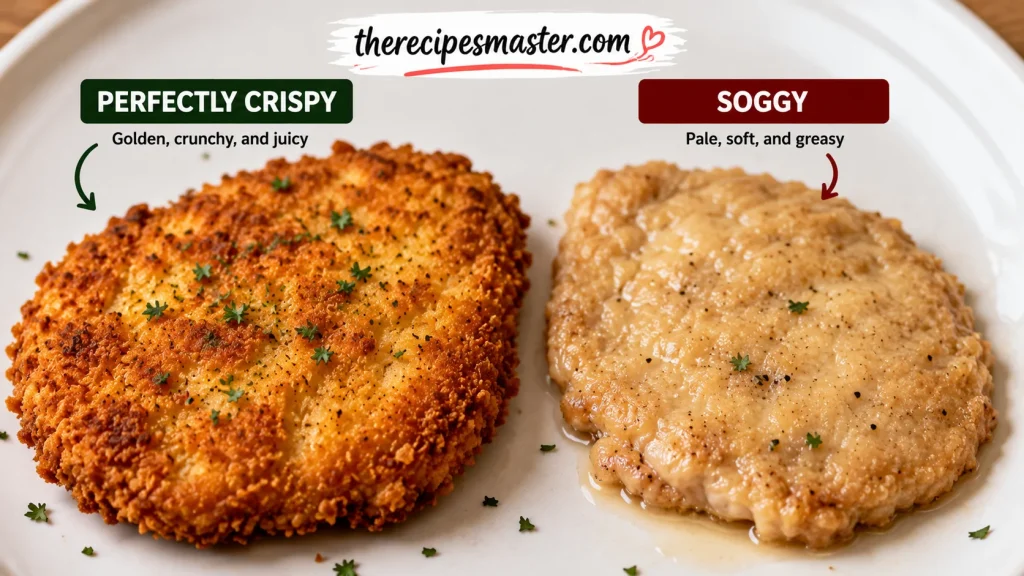
| Problem | Why It Happens | How to Fix It |
|---|---|---|
| Breading falls off | Skipped a dredge layer, or skipped the resting step | Follow all three breading stations, then rest breaded chicken 20 to 30 minutes before cooking |
| Soggy, not crispy | Oil was not hot enough, so the breading soaks up oil instead of frying | Test oil with a breadcrumb before adding chicken; it should sizzle right away |
| Dry chicken inside | Cutlets were too thin, cooked too long, or not pounded evenly | Pound to an even 1/4 to 1/2 inch and pull chicken off heat right at 165°F |
| Uneven browning | Chicken was not pounded evenly, or the pan was crowded | Pound to consistent thickness and leave space between cutlets while cooking |
| Greasy, oily crust | Cutlets drained on paper towels, trapping steam and oil underneath | Drain on a wire rack instead so air can move under the chicken |
| Breading burns before chicken cooks | Oil temperature too high | Lower heat slightly and cook a bit longer at a steadier temperature |
Tips for the Crispiest Chicken Cutlets
Flavor Variations
What to Serve With Chicken Cutlets
A good chicken cutlet recipe is really a starting point for a few different meals.
Make-Ahead, Storage, and Freezing
Make-Ahead
Bread the cutlets up to 24 hours in advance and keep them covered in the fridge until you are ready to cook. This actually helps the breading stick even better.
Storing Leftovers
Store cooked, cooled cutlets in an airtight container in the fridge for up to 4 days.
Freezing Raw Cutlets
Place breaded, uncooked cutlets in a single layer on a tray and freeze until solid, about 1 hour. Then transfer to a freezer bag and store for up to 3 months. Cook straight from frozen, adding a few extra minutes to the cooking time.
Freezing Cooked Cutlets
Cool completely, then freeze in a single layer before transferring to a freezer bag. Store for up to 2 months.
Reheating for Maximum Crispness
Skip the microwave, since it turns the breading soft and chewy. Instead, reheat in an air fryer at 375°F for 4 to 5 minutes, or in an oven at 375°F for about 10 minutes, until warmed through and crisp again.
Nutrition Information
One pan-fried chicken cutlet (based on this recipe) contains roughly:
Air-fried or oven-baked cutlets use far less oil, which lowers the fat and calorie count while keeping the protein the same. If you want a lighter version of this chicken cutlet recipe, the air fryer method is your best option.
Quick Recipe Card
Chicken Cutlet Recipe (Crispy, Juicy & Easy)
Thin, breaded chicken breast cutlets, cooked golden and crispy on the outside and juicy on the inside. Fry, air fry, or bake, whichever suits your night.
20 minutes
10 minutes
30 minutes
4 cutlets
Italian-American
Dinner
~330 kcal
Ingredients
- 2 large boneless, skinless chicken breasts (sliced into 4 cutlets)
- 1/2 cup all-purpose flour
- 2 large eggs, beaten
- 1 1/2 cups panko breadcrumbs
- 1/2 cup grated Parmesan cheese
- 1 teaspoon garlic powder
- 1 teaspoon Italian seasoning
- Kosher salt and black pepper, to taste
- Oil for frying (olive, avocado, or vegetable oil)
Instructions
- Slice each chicken breast horizontally into two thin pieces. Pound between plastic wrap to an even 1/4 to 1/2 inch thickness.
- Season chicken on both sides with salt and pepper.
- Set up three bowls: flour (seasoned), beaten egg, and breadcrumbs mixed with Parmesan, garlic powder, and Italian seasoning.
- Dredge each cutlet in flour, then egg, then press firmly into the breadcrumb mix.
- Let breaded cutlets rest in the fridge, uncovered, for 20 to 30 minutes.
- Heat 1/4 inch of oil in a skillet over medium-high heat until a breadcrumb sizzles on contact.
- Fry cutlets 3 to 4 minutes per side until golden and cooked to 165°F internal temperature.
- Drain on a wire rack, then serve warm.
Notes
For air fryer: cook at 375°F for 10 to 12 minutes, flipping halfway. For oven: bake at 400°F on a wire rack for 18 to 20 minutes, flipping halfway. Store leftovers in the fridge up to 4 days, or freeze raw or cooked cutlets for later use.
Frequently Asked Questions
Conclusion
A good chicken cutlet recipe comes down to three things: even thickness, a solid three-layer breading, and the right cooking temperature. Once you get comfortable cutting and pounding your own cutlets, you can make this dish in under 30 minutes on any weeknight, and turn it into sandwiches, chicken parmesan, or a simple dinner with a squeeze of lemon. Try one of the three cooking methods above based on how much time you have, and use the troubleshooting table if anything does not turn out the way you expected.
Hosting a dinner party? This cornish hen recipe is another elegant option for your table. If you want a spicier grilled dish instead, try this jerk chicken recipe.