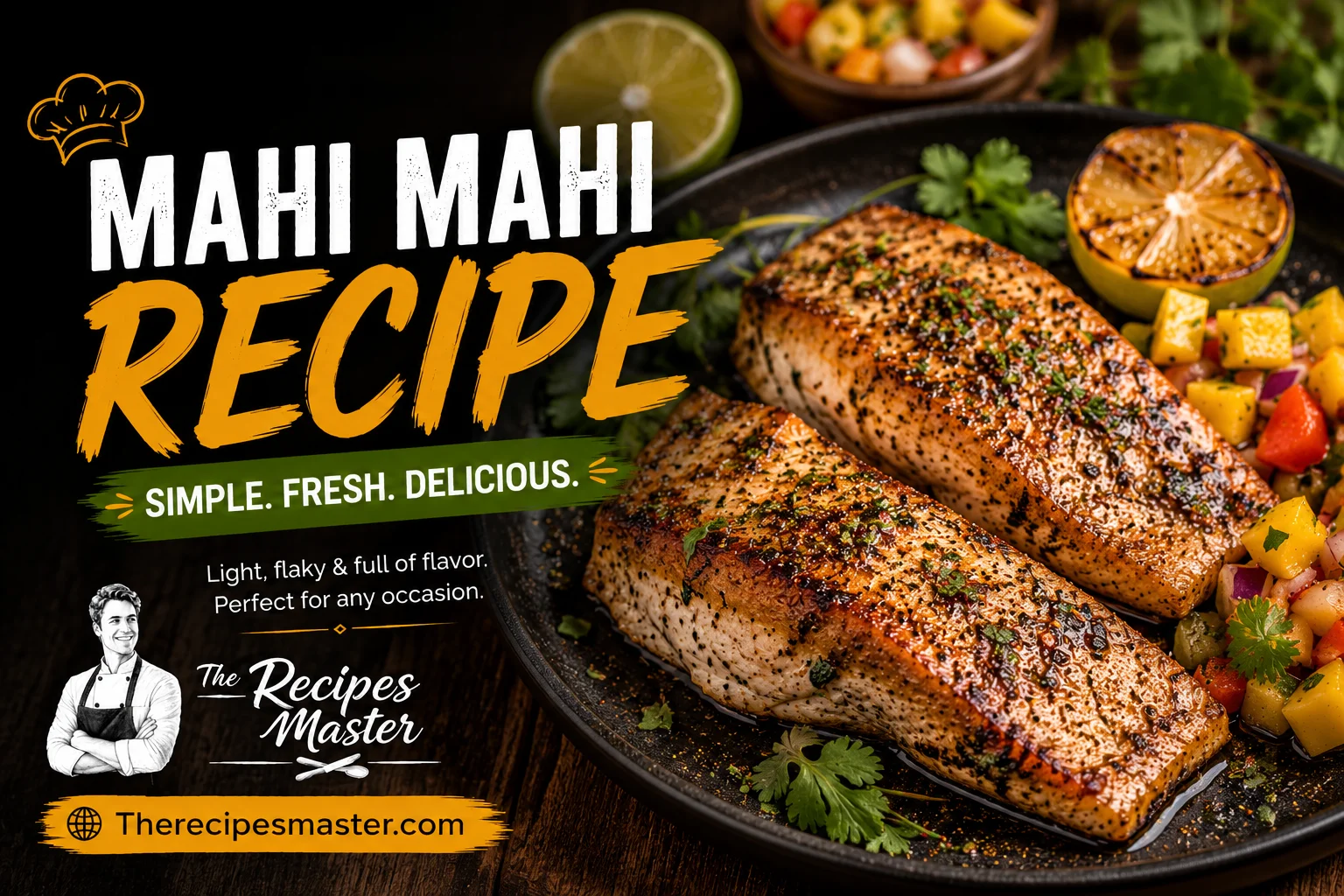
Easy Mahi Mahi Recipe for Perfect Fish Every Time
If you’ve had mahi mahi at a restaurant, you know how good it tastes mild, slightly sweet, firm, and juicy. The good news is that cooking it at home is not hard at all. This guide covers every way to cook it: pan-seared, grilled, baked, blackened, and air-fried. You’ll also get three different sauces, a buying guide, meal ideas, and answers to the most common questions people have.
This is the only mahi mahi guide you’ll need.
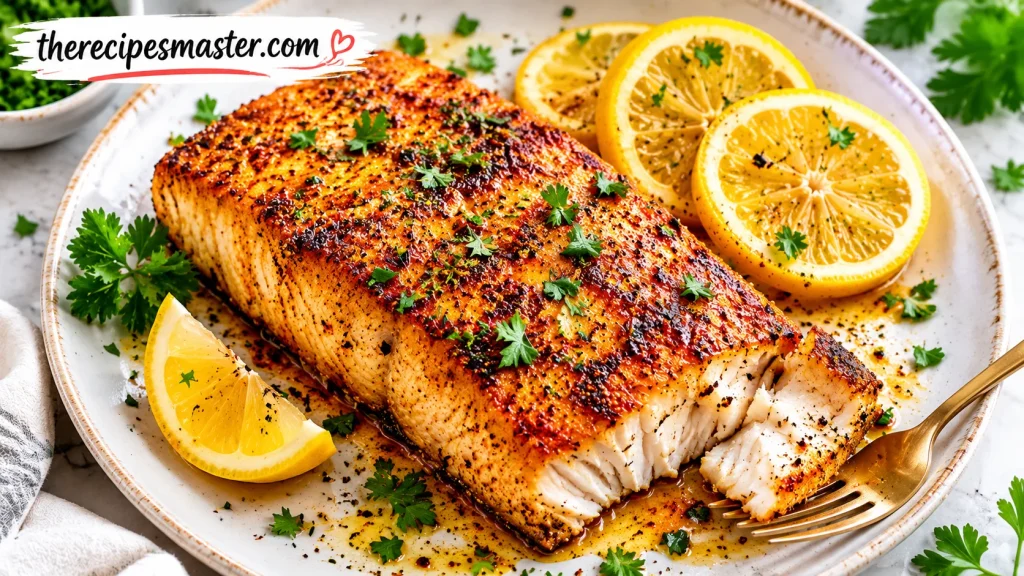
What Is Mahi Mahi Fish?
Mahi mahi is a warm-water fish found near Hawaii, the Gulf of Mexico, Costa Rica, and the Indian Ocean. In Spanish it’s called dorado. In English you might see it labeled as dolphinfish but it has nothing to do with dolphins. The name “mahi mahi” comes from the Hawaiian word meaning “very strong.”
The fish has firm, white-pink flesh that holds together well during cooking. It doesn’t fall apart like tilapia. It doesn’t have a strong fishy smell like some other fish. That’s what makes it so popular in restaurants all over the world.
Mahi mahi vs salmon: Mahi mahi is lower in fat and calories than salmon. It has a milder taste and a firmer texture. Salmon is oilier and richer. If you want a lighter fish dinner, mahi mahi is the better pick.
Mahi mahi vs tilapia: Mahi mahi is firmer, thicker, and has more flavor. Tilapia is very thin and mild. For pan-searing or grilling, mahi mahi holds up much better.
Is Mahi Mahi Healthy to Eat?
Yes. It’s one of the best fish you can eat for health. Here’s a quick look at mahi mahi nutrition facts per 4-ounce serving (cooked, no sauce):
This makes it a perfect healthy mahi mahi recipe base whether you’re eating keto, low-carb, low-calorie, or just trying to eat clean. It’s also naturally gluten-free.
Where to Buy Mahi Mahi — Fresh vs Frozen
This is the section most food blogs skip. Let’s fix that.
Fresh Mahi Mahi
At a fish counter or seafood market, look for:
Ask for fillets that are about 1 inch thick. Thinner fillets overcook too fast. Thicker ones give you a better crust and a juicy center.
Frozen Mahi Mahi
Frozen is totally fine sometimes even better than “fresh” that’s been sitting in a store for days. Costco sells a 3-pound bag of individually vacuum-sealed frozen fillets that’s a great deal. Wild Fork Foods is another solid option.
Look for fillets that are vacuum-sealed with no ice crystals inside the bag. Ice crystals mean the fish was thawed and refrozen, which hurts the texture.
How to thaw frozen mahi mahi properly: Put the sealed fillets in the fridge the night before. That’s it. Do not thaw in hot water. Do not microwave. Slow thawing in the fridge keeps the texture firm and the flavor clean.
Once thawed, pat them very dry with paper towels before cooking. Wet fish will steam in the pan instead of searing. This step is not optional.
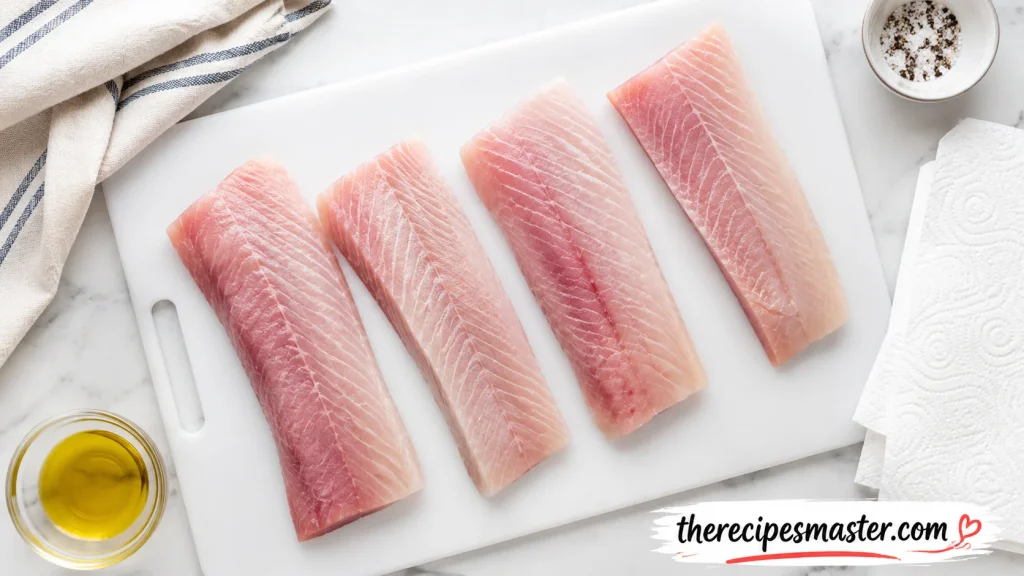
Mahi Mahi Seasonings and Marinades
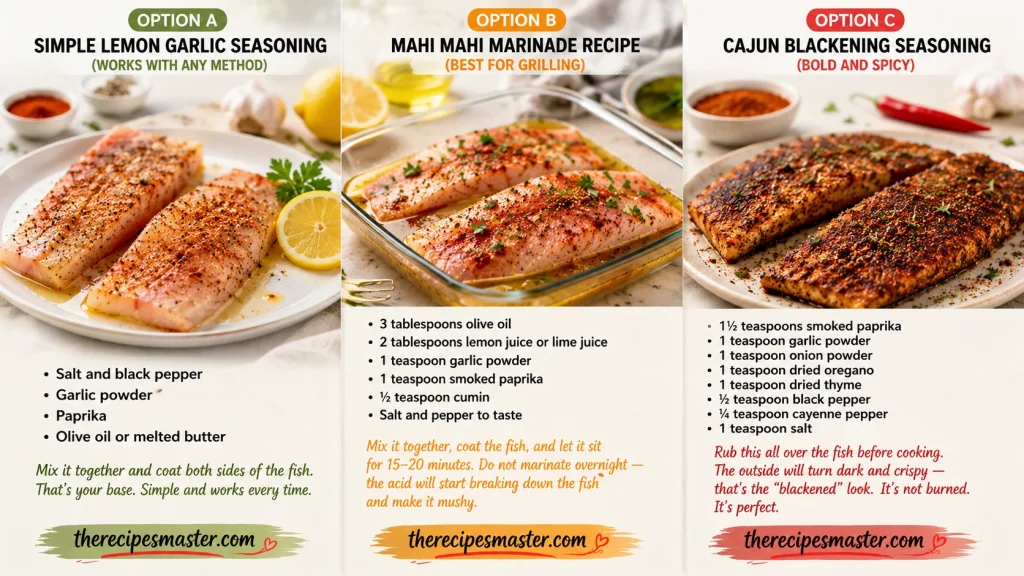
Before we get to cooking methods, let’s talk about flavor. You have three main directions you can go:
Option A: Simple Lemon Garlic Seasoning (Works with Any Method)
Mix it together and coat both sides of the fish. That’s your base. Simple and works every time.
Option B: Mahi Mahi Marinade Recipe (Best for Grilling)
A good mahi mahi marinade recipe needs acid, fat, and flavor:
Mix it together, coat the fish, and let it sit for 15–20 minutes. Do not marinate overnight — the acid will start breaking down the fish and make it mushy.
Option C: Cajun Blackening Seasoning (Bold and Spicy)
This is the mahi mahi seasoning recipe for people who love bold flavor:
Rub this all over the fish before cooking. The outside will turn dark and crispy — that’s the “blackened” look. It’s not burned. It’s perfect.
How to Cook Mahi Mahi — 5 Methods
Method 1: Pan-Seared Mahi Mahi (Best for Beginners)
Pan seared mahi mahi gives you a golden-brown crust on the outside and soft, juicy fish on the inside. This is the most popular way because it’s fast and the result looks restaurant-level.
What you need:
Steps:
Pro tip: If your fillets are thicker than 1 inch, use the stovetop-to-oven method. Sear 3 minutes on the stovetop, then put the oven-safe pan directly into a 400°F oven for 5 minutes. This gives even cooking all the way through without drying out the outside.
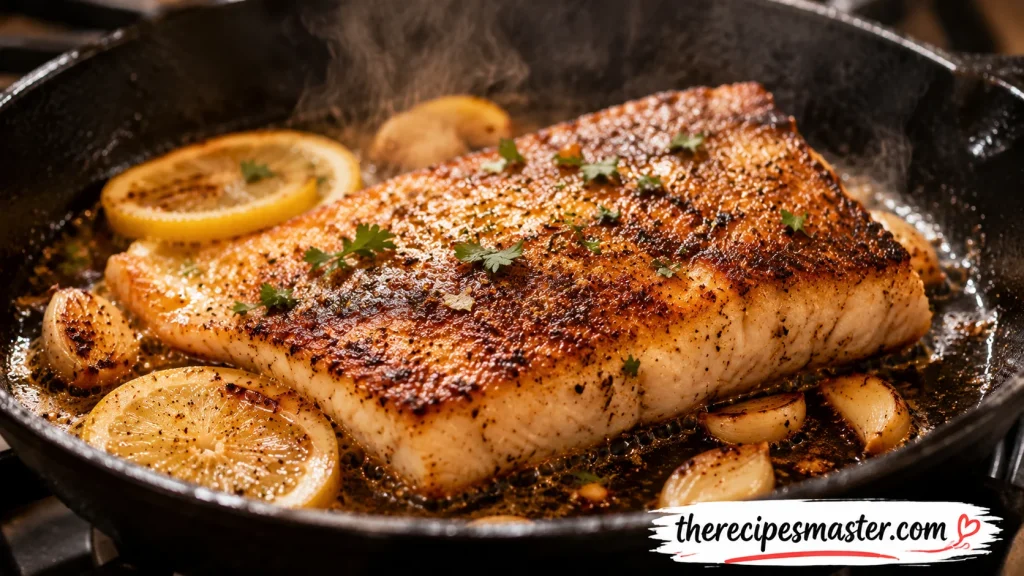
Method 2: Grilled Mahi Mahi Recipe
This is the best easy mahi mahi recipe for summer. The grill adds a smoky flavor that works perfectly with a mango salsa or light herb butter.
Steps:
Tip: If the fish sticks to the grill, it’s not ready to flip yet. Wait another 30 seconds. It will release cleanly when the crust is formed.
Method 3: Baked Mahi Mahi Recipe (Easiest Method)
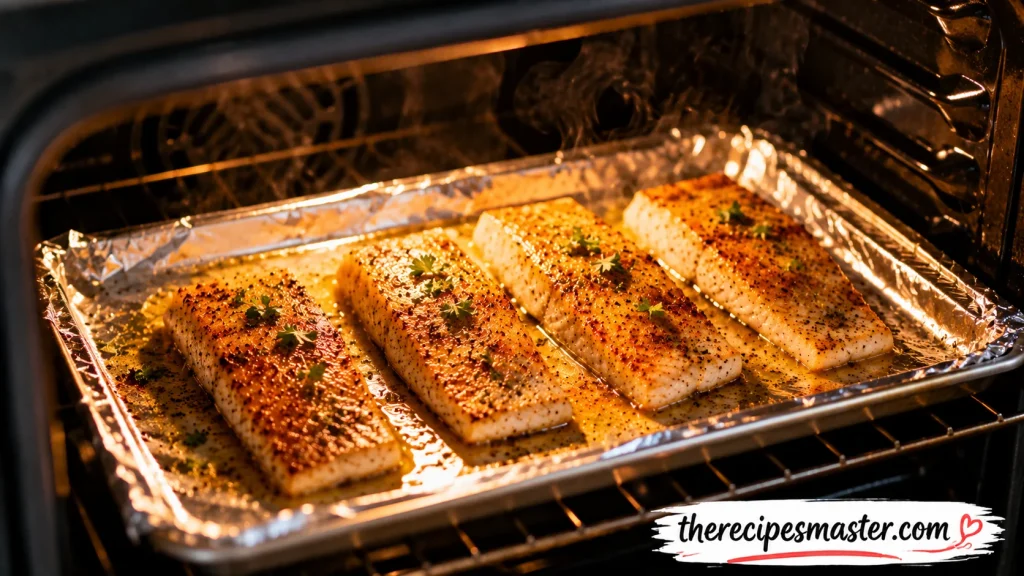
The baked mahi mahi recipe is the most hands-off way. Great for busy nights when you don’t want to stand over a stove.
How long to bake mahi mahi: At 400°F, bake for 12–15 minutes. At 375°F, bake for 15–18 minutes. You don’t need to flip the fish in the oven.
Steps:
Sheet pan dinner idea: Put quartered baby potatoes on the same pan, tossed with olive oil and salt. Roast the potatoes for 20–25 minutes first. Then add the fish for the last 12 minutes. One pan, full dinner.
Method 4: Blackened Mahi Mahi Recipe
The blackened mahi mahi recipe is for people who want bold, spicy, smoky flavor. Use the Cajun seasoning blend from Option C above.
Steps:
- Brush the fish with a thin layer of olive oil so the seasoning sticks better.
- Press the blackening seasoning firmly onto both sides of each fillet.
- Heat a skillet over medium to medium-high heat. Add 1 tablespoon butter + 1 tablespoon olive oil.
- Add the fish. Cook 4–6 minutes per side without moving.
- The outside will turn very dark almost black. This is supposed to happen.
- Cook to 145°F internal temp. Serve immediately.
Serve blackened mahi mahi in fish tacos, on a sandwich with slaw, or over rice with a squeeze of lime.
Method 5: Air Fryer Mahi Mahi Recipe
The air fryer mahi mahi recipe is the quickest method and uses the least oil. Perfect for a quick mahi mahi dinner on busy nights.
Steps:
The outside gets lightly crispy. The inside stays moist. It’s a solid 30 minute mahi mahi recipe when you count prep time too..l
Mahi Mahi Internal Temperature — How to Know It’s Done
The USDA says fish is safe to eat at 145°F internal temperature. Use an instant-read thermometer and insert it into the thickest part of the fillet.
If you don’t have a thermometer, look for these signs:
Don’t overcook it. Mahi mahi goes from perfectly done to dry very fast. Once you hit 145°F, pull it off the heat immediately.
Mahi Mahi Cook Time by Method
| Method | Time | Temp |
|---|---|---|
| Pan-seared | 6–8 min total | Medium-high |
| Grilled | 8–10 min total | Medium-high |
| Baked (400°F) | 12–15 min | 400°F oven |
| Air fryer | 10–12 min | 400°F |
| Blackened | 8–12 min total | Medium-high |
Always go by internal temperature, not just time. Fish thickness varies.
3 Sauces for Mahi Mahi
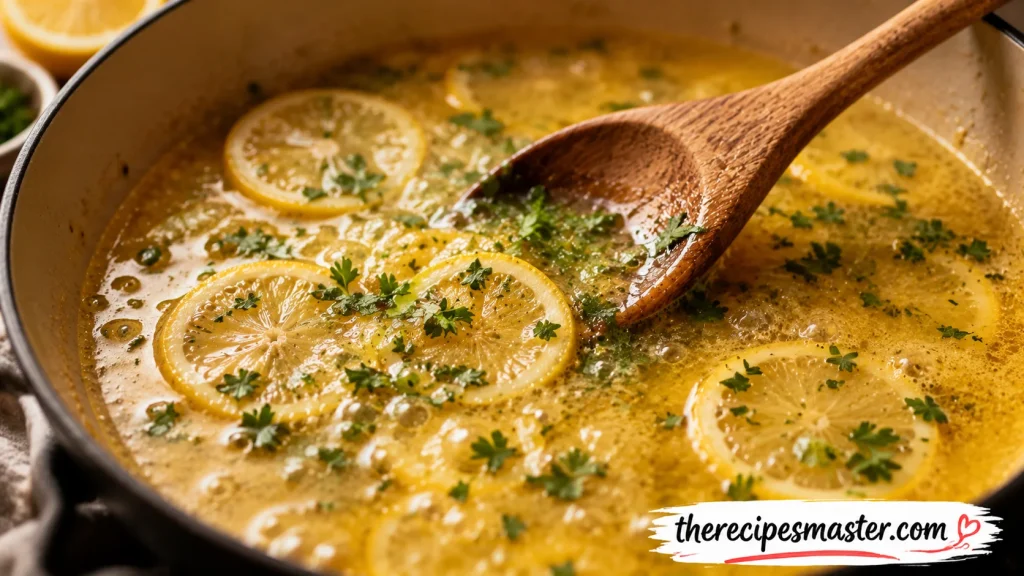
Sauce 1: Mahi Mahi Lemon Butter Sauce (Classic)
This mahi mahi lemon garlic sauce works with pan-seared and baked methods. Make it in the same pan after the fish is done.
Ingredients:
Steps:
The mahi mahi garlic butter in this sauce is what makes it taste like restaurant food. Use cold butter it creates a silky sauce. Hot butter just separates.
Sauce 2: Mahi Mahi with Mango Salsa (Fresh and Tropical)
This sauce is perfect for grilled mahi mahi. No cooking required.
Ingredients:
Mix everything in a bowl. Taste and adjust salt and lime. Spoon generously over grilled fish.
This is a tropical mahi mahi recipe that’s light, bright, and perfect for summer. The mango salsa recipe for fish also works on tacos and rice bowls.
Sauce 3: Mahi Mahi with Cream Sauce (Rich and Comforting)
For a richer option, this mahi mahi with cream sauce is perfect for a dinner party.
Ingredients:
Steps:
Mahi Mahi Meal Ideas — More Than Just a Fillet on a Plate
Mahi Mahi Fish Tacos
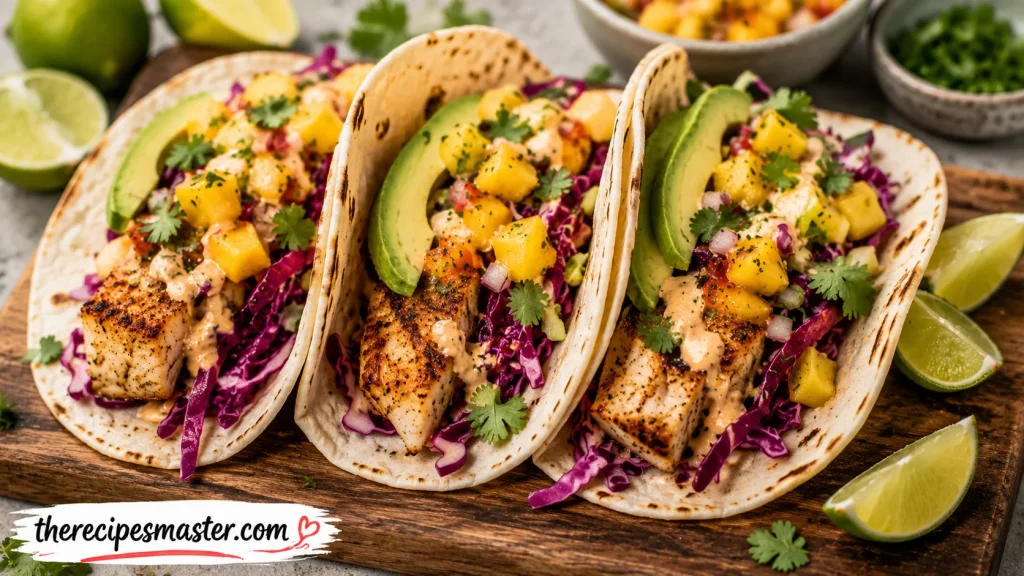
Use blackened or grilled mahi mahi. Flake the fish into warm corn or flour tortillas. Add shredded cabbage slaw, mango salsa or pico de gallo, a drizzle of chipotle mayo or sour cream, and a fresh lime squeeze.
This mahi mahi fish tacos recipe is ready in under 30 minutes and one of the best things you can make for a crowd.
Mahi Mahi Rice Bowl (Hawaiian Style)
Think Hawaiian mahi mahi recipe vibes. Use baked or grilled fish. Serve over coconut rice (cook rice with coconut milk instead of water), sliced avocado, edamame, pickled red onion, and sesame seeds with a drizzle of teriyaki glaze.
This is a proper mahi mahi burrito bowl style meal filling, healthy, and beautiful on the plate.
Mahi Mahi Sandwich
Use blackened or pan-seared fish. Put on a soft brioche bun with iceberg lettuce, sliced tomato, remoulade or tartar sauce, and thin red onion rings. This mahi mahi sandwich recipe is better than any fast food fish sandwich.
Mahi Mahi Teriyaki Bowl
Brush fillets with teriyaki glaze before grilling. Serve over white rice with steamed broccoli and sesame seeds. This mahi mahi teriyaki recipe is one of the fastest weeknight dinner options you’ll make.
What to Serve with Mahi Mahi
Most blogs just say “serve with rice.” Here’s a fuller picture.
Rice and grains: White rice, basmati, brown rice, coconut rice (pairs great with tropical preparations), cauliflower rice for keto mahi mahi recipe nights, orzo or couscous.
Vegetables: Roasted asparagus with olive oil and lemon, grilled zucchini or broccolini, steamed green beans, roasted cherry tomatoes.
Starchy sides: Garlic mashed potatoes, roasted baby potatoes, crusty bread for soaking up that lemon butter sauce.
Salads: Simple arugula salad with lemon dressing, cucumber and tomato salad, spinach salad with strawberries and balsamic.
All of these side dishes for fish work with any cooking method in this guide.
Storage, Reheating, and Leftover Ideas
Common Mistakes People Make
Not patting the fish dry. Wet fish steams instead of sears. You get a pale, soft surface instead of a golden-brown crust. Always pat with paper towels.
Cold pan. The pan has to be hot before the fish goes in. If the oil isn’t shimmering or almost smoking, wait longer.
Moving the fish too much. Once the fish is in the pan, leave it alone. It will stick at first, then release naturally when the crust is ready.
Using thin fillets. Fillets thinner than ½ inch overcook in seconds. Ask for at least ¾ to 1 inch thick pieces.
Overcrowding the pan. Cook in batches if needed. Too many fillets lower the pan temperature and cause steaming instead of searing.
Skipping the thermometer. The 145°F rule saves you from undercooked or overcooked fish every time.
Substitutes for Mahi Mahi
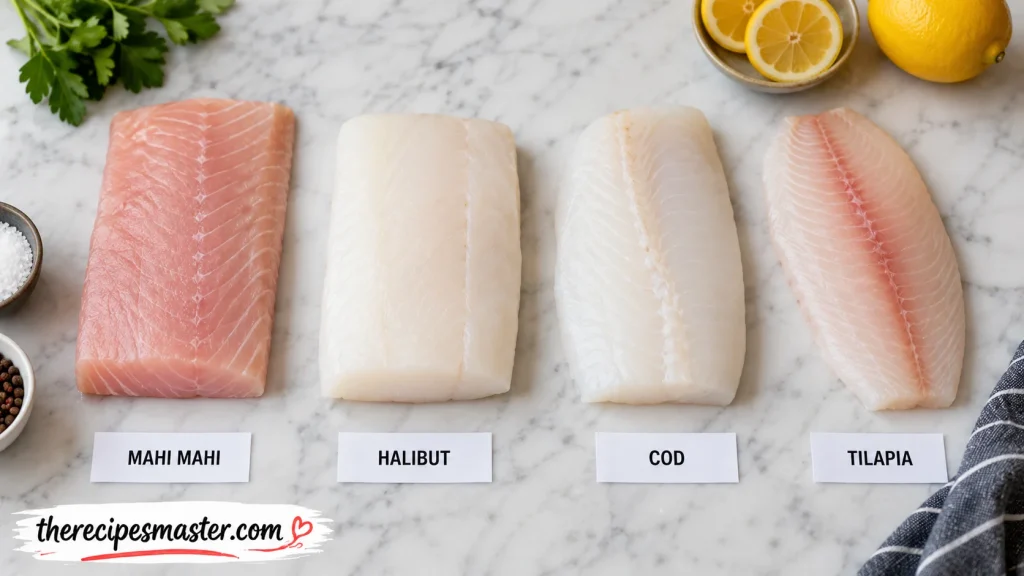
If mahi mahi isn’t at your store, here are the best swaps:
Any of these work with the same sauces and seasonings. Always check internal temp regardless of which fish you use.
The Best Mahi Mahi Recipe (Full Recipe Card)
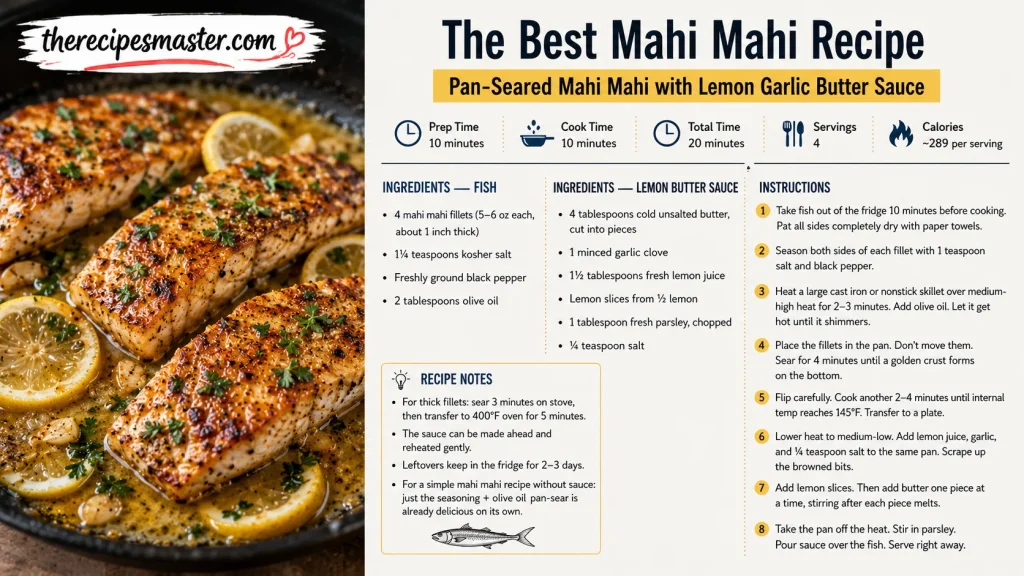
Pan-Seared Mahi Mahi with Lemon Garlic Butter Sauce
Prep Time: 10 minutes | Cook Time: 10 minutes | Total Time: 20 minutes | Servings: 4 | Calories: ~289 per serving
Ingredients — Fish:
Ingredients — Lemon Butter Sauce:
Instructions:
Recipe Notes:
Frequently Asked Questions
Conclusion
Mahi mahi is one of those fish that’s hard to mess up once you know the basics. Pat it dry, get the pan hot, don’t move it, and check the temperature. Those four things are 90% of the battle. The best mahi mahi recipe is whichever one fits your night a quick lemon butter pan-sear for a weeknight, a grilled version with mango salsa for the weekend, or a blackened fillet stuffed into a taco for something fun and bold. Try one method this week. Once you see how the fish behaves, everything else the sauces, the variations, the meal ideas comes naturally after that.
If you love flaky white fish, you’ll also enjoy this red snapper recipe with similar cooking methods. Pair it with something rich like our smoked salmon recipes for a full seafood spread.