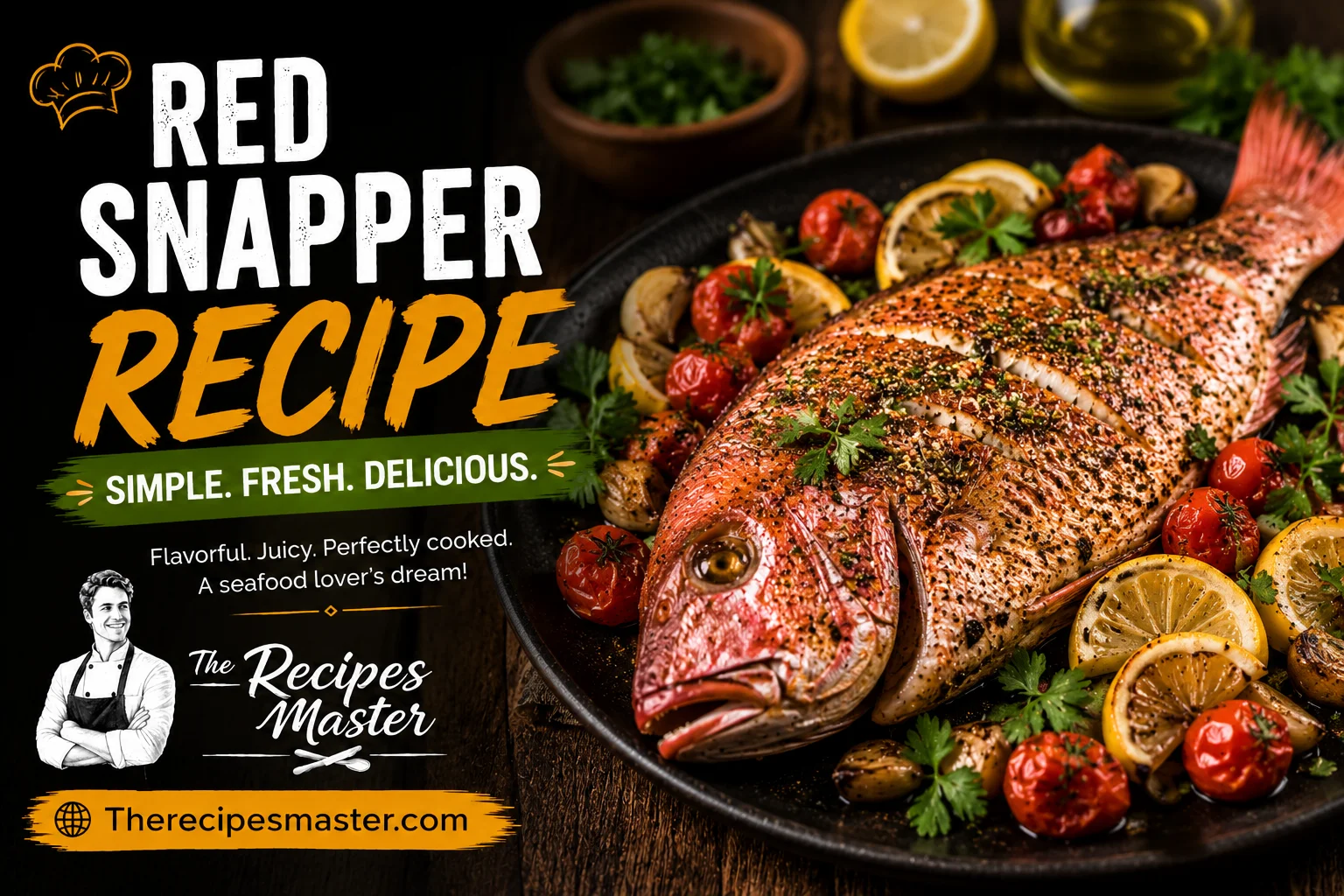
Easy Red Snapper Recipe Ready in Under 30 Minutes
I made my first red snapper recipe on a Tuesday night with no plan and a fillet I almost put back at the fish market. The skin came out perfectly crispy. The inside was soft and flaky. My family asked me to make it again the next day.
That was three years ago. Since then, I have made this fish more than any other seafood in my kitchen. I have tried five different cooking methods, tested at least a dozen seasoning combinations, and burned two pans finding out what not to do.
This guide gives you everything I learned. You get the main red snapper recipe plus four other cooking methods, tips for buying the right fish, seasoning ideas, sides, storage advice, and answers to the most common questions people ask about cooking snapper.
Prep Time: 10 minutes | Cook Time: 15 minutes | Total Time: 25 minutes | Servings: 4 | Difficulty: Easy
What Is Red Snapper and Why Does It Taste So Good?
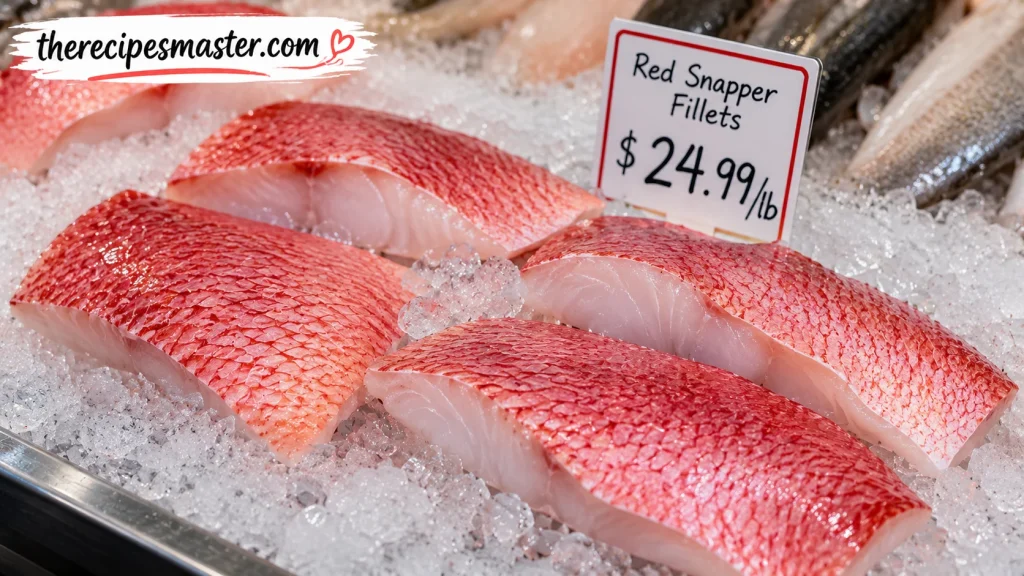
Red snapper is a firm white fish with a mild, slightly sweet flavor. It does not taste fishy at all. The meat is dense and holds up well in a hot pan, which makes it perfect for getting a golden, crispy outside while staying soft and moist inside.
People who do not usually like fish often love red snapper because of how gentle the flavor is. It takes seasoning well, which means you can go simple with just salt and lemon, or bold with Cajun spices and mango salsa.
True Red Snapper vs. What You Might Actually Get
Here is something most recipe sites skip: a lot of fish sold as red snapper at stores is not actually true red snapper. Studies show that up to 74% of fish labeled red snapper in restaurants is a different species, usually rockfish or tilapia.
True red snapper comes from the Gulf of Mexico and has a brighter red skin, firmer flesh, and a slightly sweeter taste. Rockfish is fine to cook the same way and still tastes great. But if you want the real thing, buy from a trusted fish market or a seafood delivery service like Fulton Fish Market or Sitka Seafood Market.
Quick Tip: Ask your fishmonger specifically for Gulf red snapper (Lutjanus campechanus). If they cannot confirm the species, you are probably getting rockfish, which still works great in this recipe.
How to Buy Red Snapper: What to Look For
This section alone will save you from bad fish. Most red snapper recipe guides skip the buying step completely. That is a mistake because even the best recipe cannot fix a fish that was not fresh to begin with.
Signs of Fresh Red Snapper
Fresh vs. Frozen: Which One to Buy?
Fresh is great when you live near the coast or have a good fish market nearby. Frozen is a perfectly fine choice too. Fish is frozen right on the boat in many cases, which means it can be fresher than fresh fish that has been sitting in a store for days.
If buying frozen, look for vacuum-sealed packaging with no ice crystals inside the bag. Ice crystals mean the fish has thawed and refrozen at some point, which hurts the texture.
| Type | Best For | Price Range | Where to Buy |
|---|---|---|---|
| Fresh whole fish | Whole fish recipes, grilling | $8–$15/lb | Fish market, docks |
| Fresh fillets | Pan-searing, quick dinners | $15–$25/lb | Fish market, Whole Foods |
| Frozen fillets | Meal prep, convenient | $8–$14/lb | Grocery stores, online |
| Online delivery | Best quality guarantee | $16–$28/lb | Fulton Fish Market, Sitka |
Whole Fish vs. Fillets: Which Should You Choose?
Choose whole fish if the snapper is 12 inches or smaller. Smaller fish have a high bone-to-meat ratio, so filleting them wastes a lot of good meat. Cook them whole.
Choose fillets for fish larger than 12 inches or when you want a quicker, easier dinner. Fillets are also easier for kids and guests who do not want to deal with bones.
5 Ways to Cook Red Snapper
Most red snapper recipe articles give you one method and call it done. Here are all five cooking methods so you can pick what works for your kitchen and your time.
| Method | Cook Time | Skill Level | Best For | Result |
|---|---|---|---|---|
| Pan-Seared | 12–15 min | Easy | Weeknight dinner | Crispy skin, restaurant quality |
| Baked | 18–22 min | Very Easy | Hands-off cooking | Tender, moist fish |
| Grilled | 10–14 min | Medium | Summer cookout | Smoky, charred flavor |
| Whole Fish | 22–28 min | Medium | Special occasions | Maximum flavor |
| Fried | 15–20 min | Medium | Crispy golden crust | Crunchy coating |
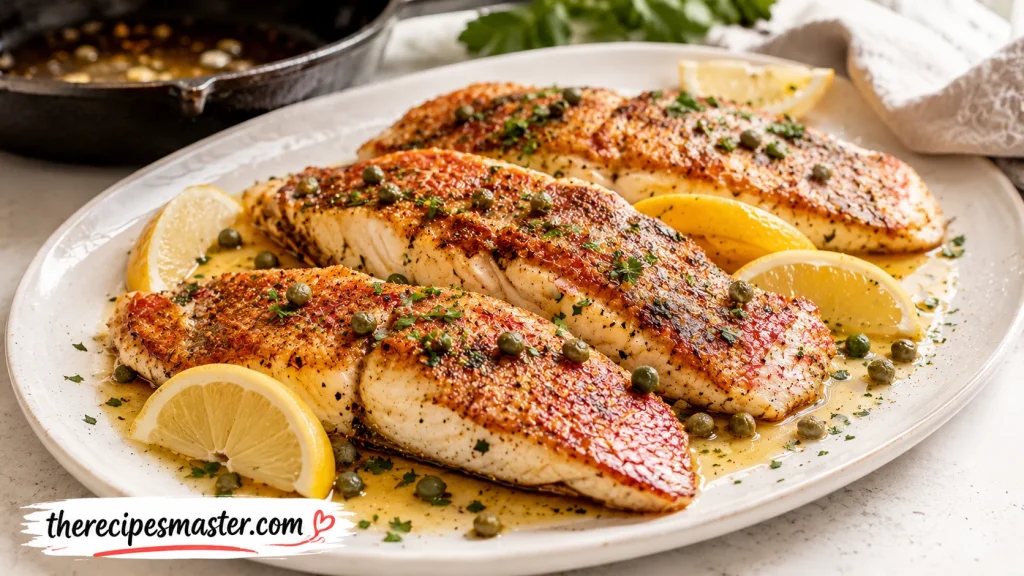
The Main Red Snapper Recipe: Pan-Seared with Lemon Butter Sauce
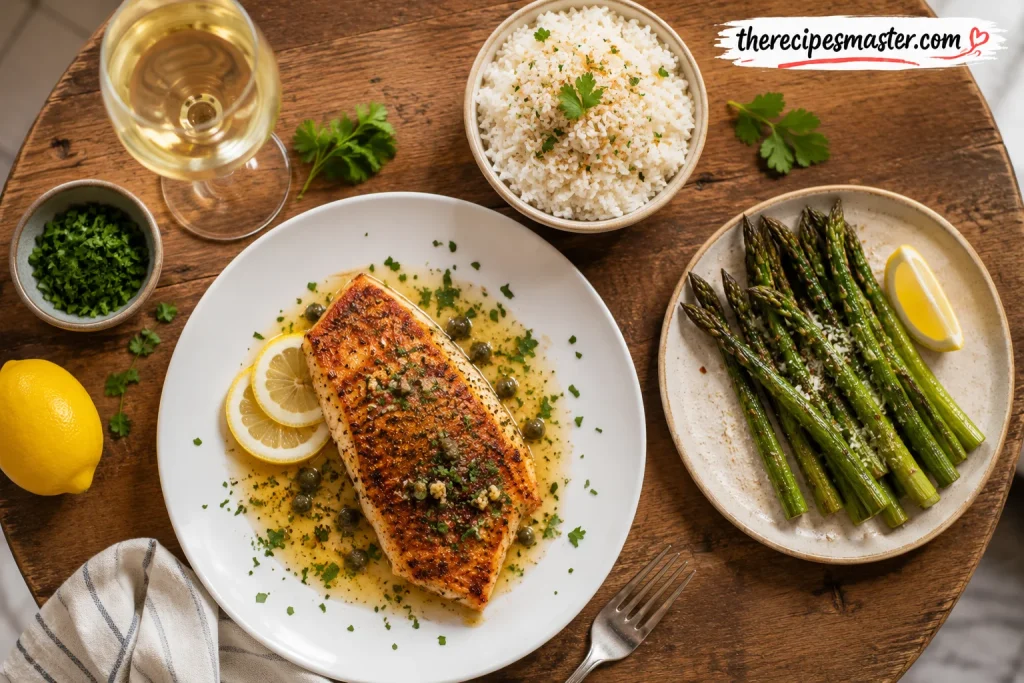
This is the red snapper recipe people come back to again and again. Pan-searing gives you the crispiest skin and the most flavor without a lot of effort. The lemon butter sauce comes together in the same pan in under two minutes.
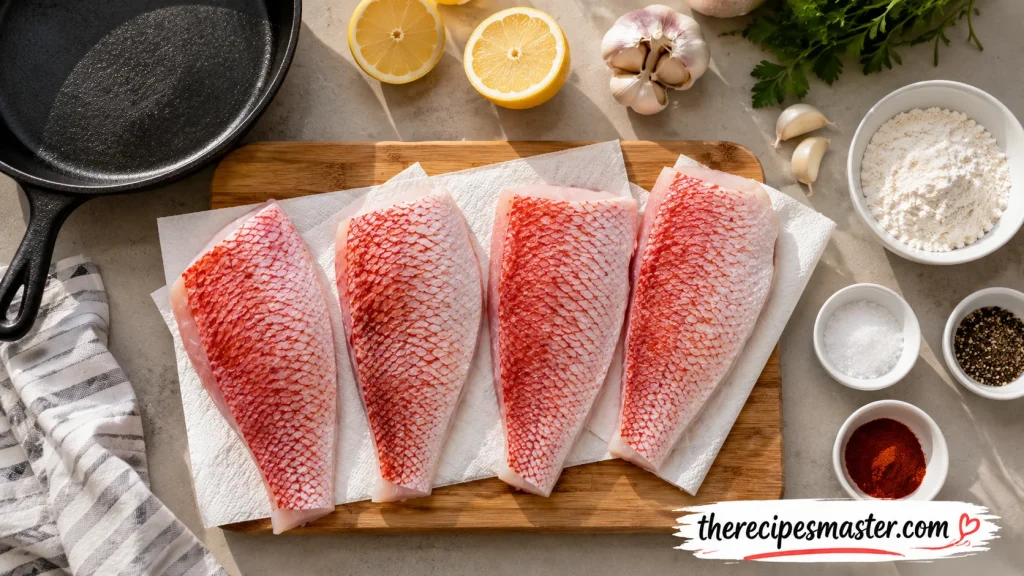
Ingredients
For the Fish:
For the Lemon Butter Sauce:
Equipment You Need
Step-by-Step Instructions
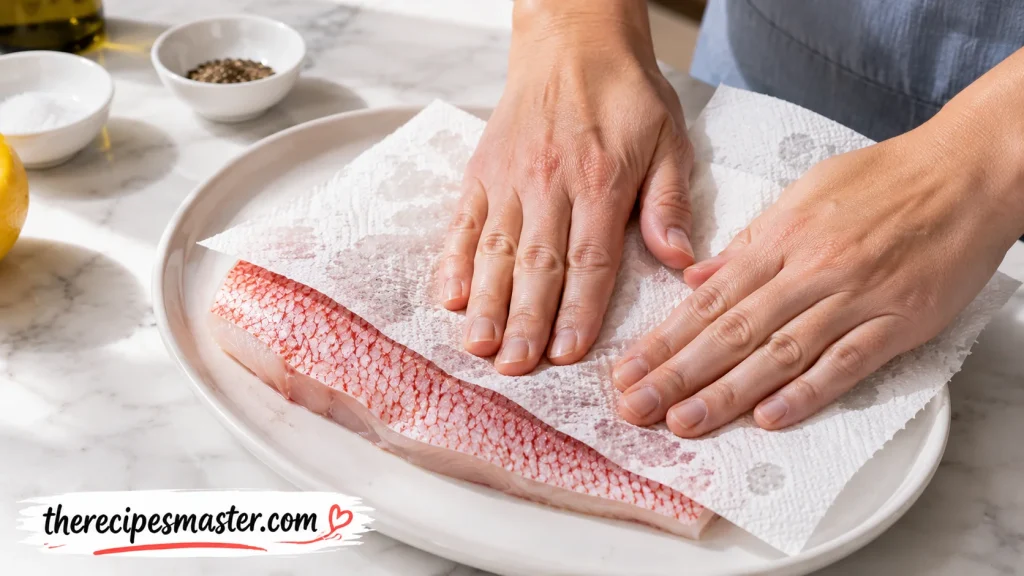
Step 1: Dry the fish completely
This is the most important step in this red snapper recipe. Pat every surface of each fillet dry with paper towels. Press firmly. Moisture on the fish creates steam when it hits the hot pan, and steam is the enemy of a crispy crust.
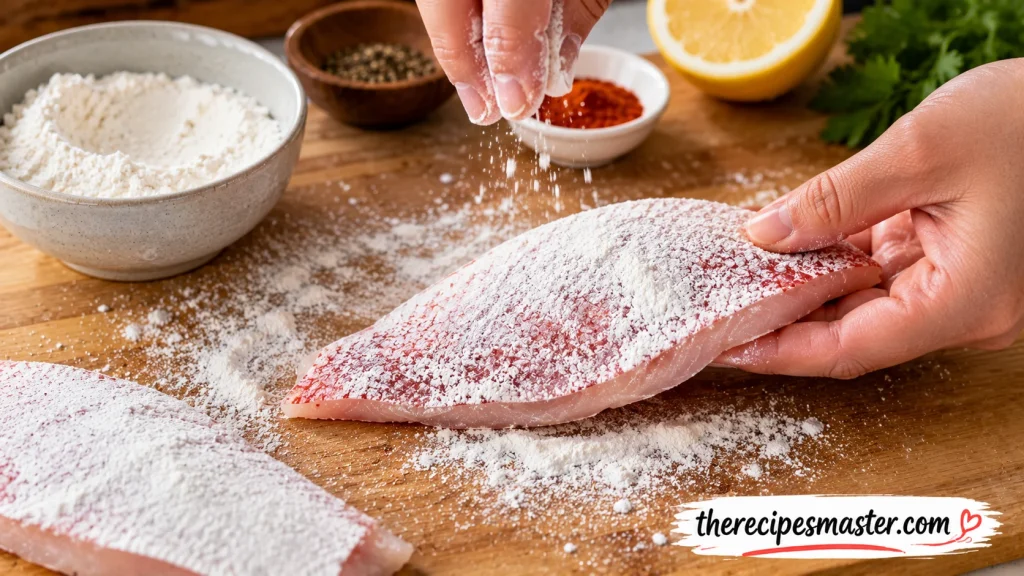
Step 2: Season, then dust with flour
Mix the salt, pepper, smoked paprika, and garlic powder together. Sprinkle it on both sides of each fillet. Then add a very thin dusting of flour on the skin side only. The flour creates a barrier that gives you a golden, crispy surface. Tap off any excess flour.
Step 3: Heat your pan properly
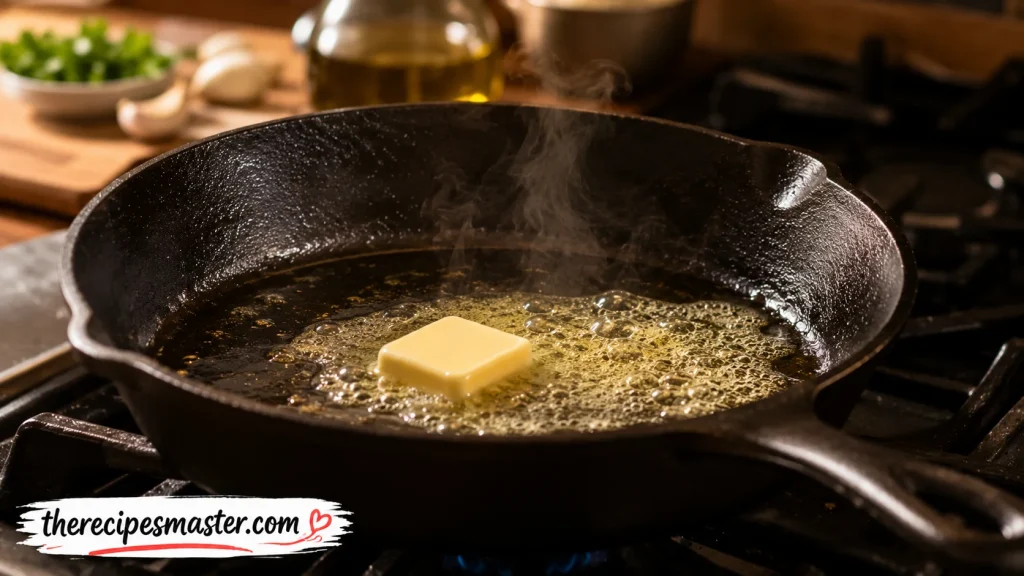
Add the butter and olive oil to your cold skillet. Turn the heat to medium-high. Wait until the butter melts and the foam starts to settle down. You want the pan hot enough that a drop of water sizzles immediately on contact. Do not rush this step.
Step 4: Place fish skin-side down, then leave it alone
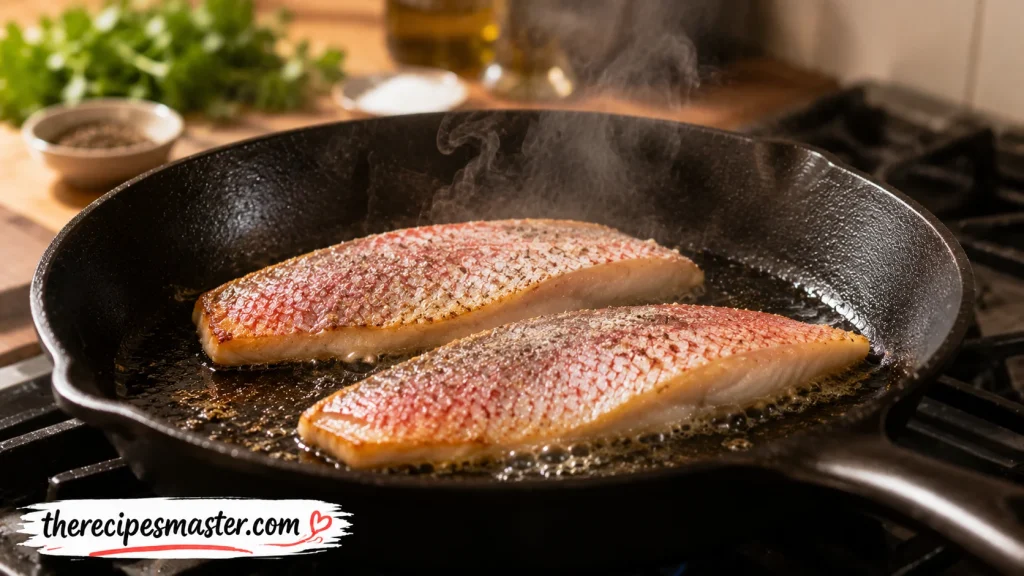
Place the fillets in the pan skin-side down. Press each one gently with your spatula for the first 10 seconds so the skin stays flat against the pan. Then set a timer for 4 minutes and do not touch the fish. This is where most people go wrong. Moving the fish breaks the crust before it forms.
Pro Tip: If the fish sticks when you test it at 4 minutes, it is not ready. A properly seared fillet releases on its own when the crust has formed. Give it another 30 to 60 seconds and try again.
Step 5: Flip and finish
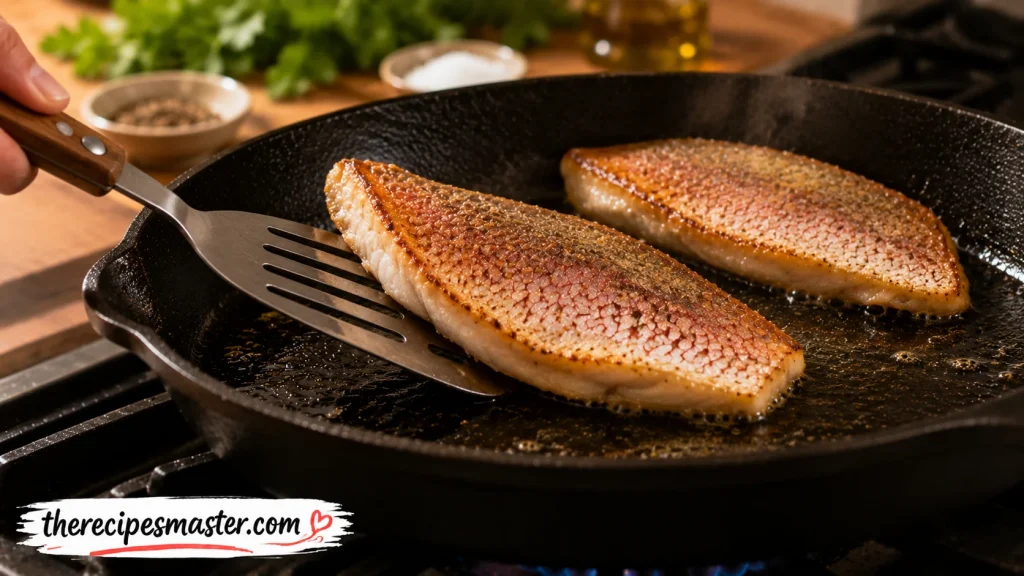
Slide your spatula under the fillet and flip gently. Add a small pat of butter on top of each fillet. Cook for 3 to 4 more minutes. The fish is done when the flesh is opaque all the way through and flakes easily with a fork. Internal temperature should reach 145°F.
Step 6: Make the lemon butter sauce
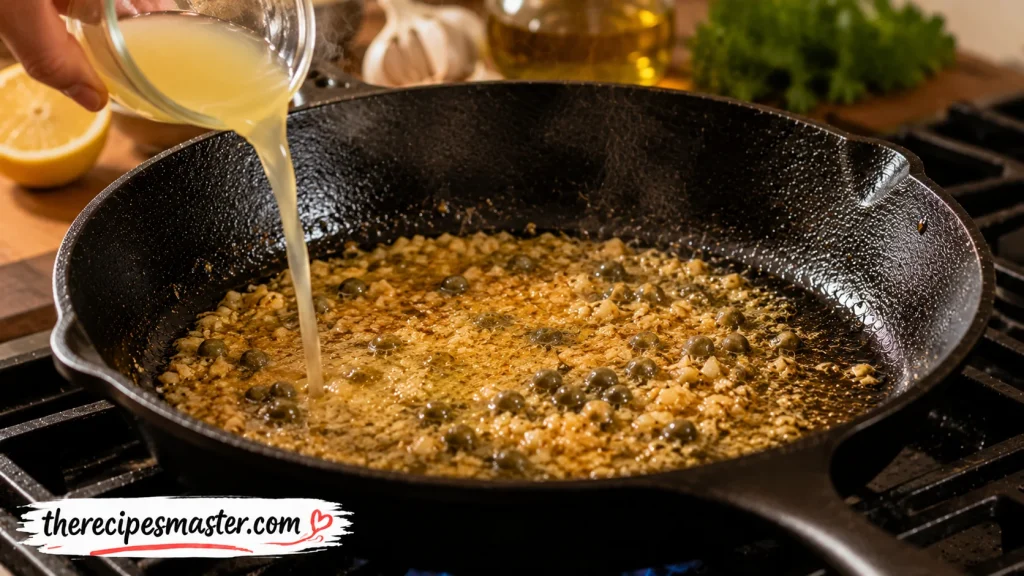
Remove the fish to a plate. Reduce heat to medium. Add butter to the same pan and let it melt. Add minced garlic and cook for 30 seconds until you can smell it. Add lemon juice and capers. Stir with a wooden spoon, scraping up all the browned bits from the pan. Those bits are pure flavor. Cook the sauce for 1 minute, then pour it over the fish.
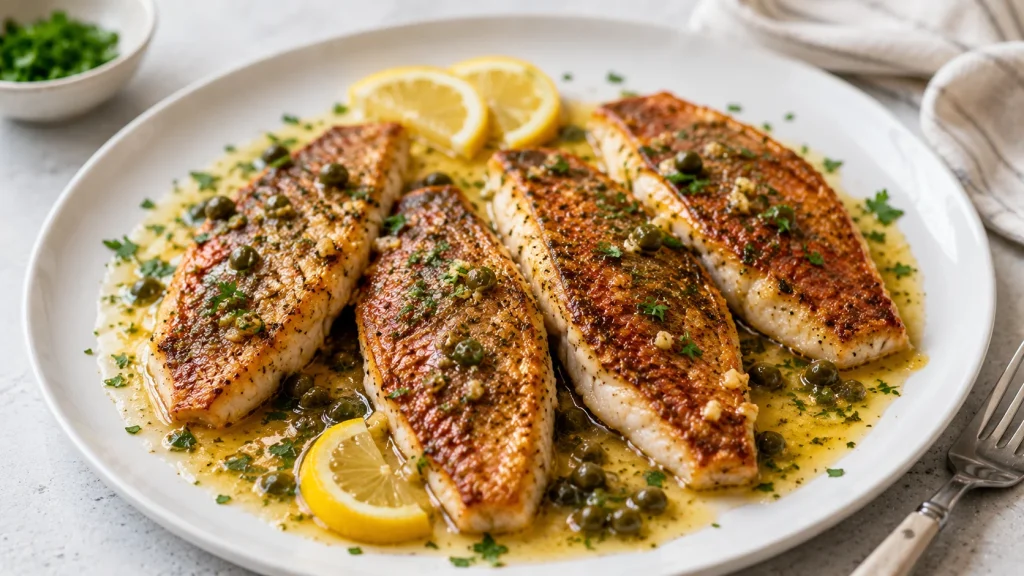
Step 7: Plate and serve immediately
Red snapper recipe tastes best right off the pan. Serve right away with your lemon butter sauce, extra lemon wedges, and a sprinkle of fresh parsley.
The Secret to Crispy Skin on Red Snapper (And Why It Works)
Getting crispy skin on a red snapper recipe is not magic. It is science. When you understand why each step matters, you stop guessing and start getting perfect results every time.
Why You Must Pat the Fish Dry
Water turns to steam at 212°F. If your fish is wet when it hits a 375°F pan, the surface moisture has to evaporate first before any browning can happen. By the time the moisture is gone, the outside of your fish is already overcooked. Dry fish goes straight to browning from the first second.
Why Flour Helps
A thin coat of flour gives the heat something to grab onto. It creates a thin shell that crisps up faster than bare fish skin. Too much flour and you get a coating. Too little and it does not help. You want just enough flour to lightly coat the surface, like a fine dusting of snow.
Why Pan Temperature Matters
A pan that is not hot enough means the fish sits in lukewarm butter and poaches instead of sears. A pan that is too hot burns the outside before the inside cooks. Medium-high heat with butter and oil is the right balance. The oil raises the smoke point of the butter so it does not burn as quickly.
The Four-Minute Rule
When protein hits a hot surface, it initially sticks. As it cooks and a crust forms, it naturally releases from the pan. If you try to flip too early, the crust rips and you end up with fish without skin. Four minutes at medium-high heat is the sweet spot for a 6-ounce fillet.
How to Test Pan Temperature Without a Thermometer: Flick a small drop of water into the pan. If it sizzles and disappears instantly, the pan is ready. If it dances around in little balls, the pan is too hot. If it just sits there and bubbles slowly, the pan needs more time.
6 Seasoning Variations for Red Snapper Recipe
The basic seasoning in this red snapper recipe works every time. But once you get comfortable with the method, try these variations to keep things interesting.
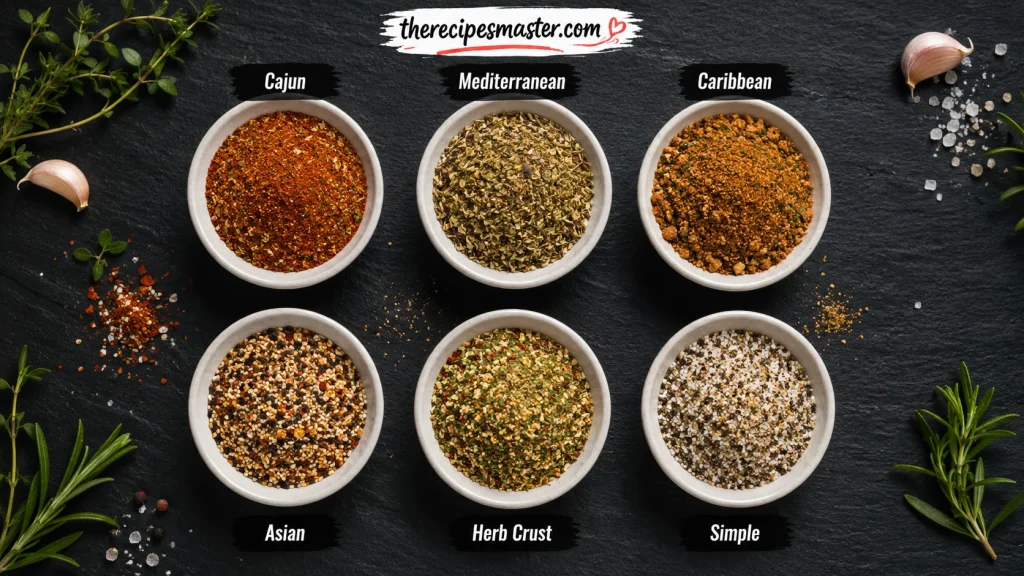
1. Cajun Red Snapper
Great with: dirty rice, cornbread, coleslaw
2. Mediterranean Red Snapper
Great with: Greek salad, roasted tomatoes, pita bread
3. Caribbean Red Snapper
Great with: rice and peas, plantains, mango salsa
4. Asian-Style Red Snapper
Great with: steamed rice, bok choy, edamame
5. Herb Crust Red Snapper
Great with: asparagus, roasted potatoes, green salad
6. Simple Lemon Garlic Red Snapper
Great with: anything this is the purest version of the flavor
Baked Red Snapper Recipe (Hands-Off Method)
If you do not want to stand at the stove, baking is a great way to cook red snapper. You still get moist, flaky fish. You just do not get the crispy skin.
How to Bake Red Snapper
Baked Snapper Tip: Thickness rule cook fish for 10 minutes per inch of thickness at 400°F. A 1-inch thick fillet takes 18–20 minutes. A thinner fillet takes 12–15 minutes.
Grilled Red Snapper Recipe
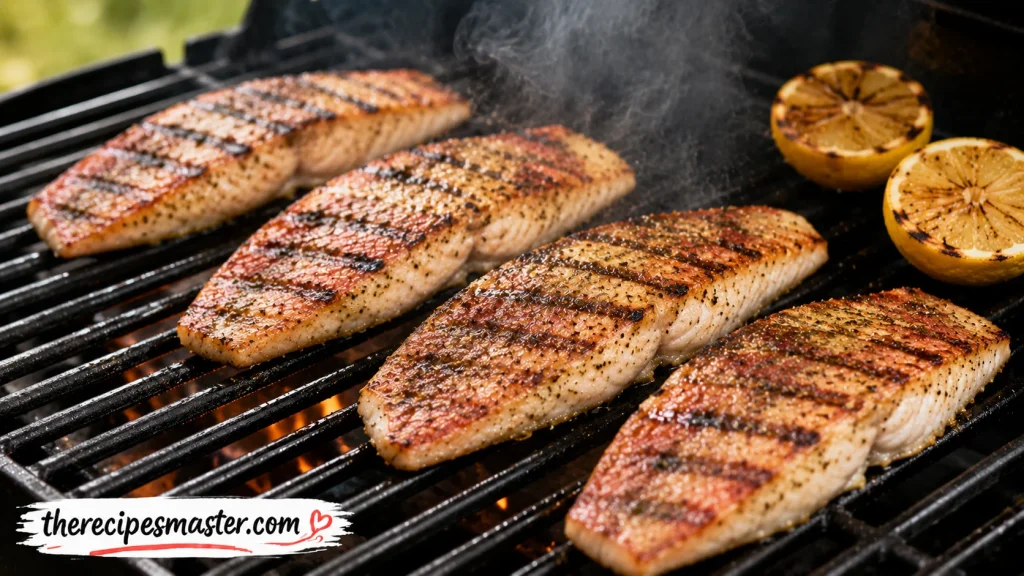
Grilling gives red snapper a smoky, slightly charred flavor that works really well with the sweet, mild fish. The key is a very clean, very hot, well-oiled grill grate.
How to Grill Red Snapper
Grilling Tip: For whole fish on the grill — score the skin with 3 or 4 diagonal cuts on each side. This helps heat reach the thicker parts and prevents the skin from curling up.
Whole Red Snapper Recipe (Caribbean Style)
This is how most of the Caribbean and Mediterranean world cooks snapper. The whole fish stays more moist than a fillet because the bones and head protect the meat from drying out. Plus, the cheeks are the best bite on the whole fish.
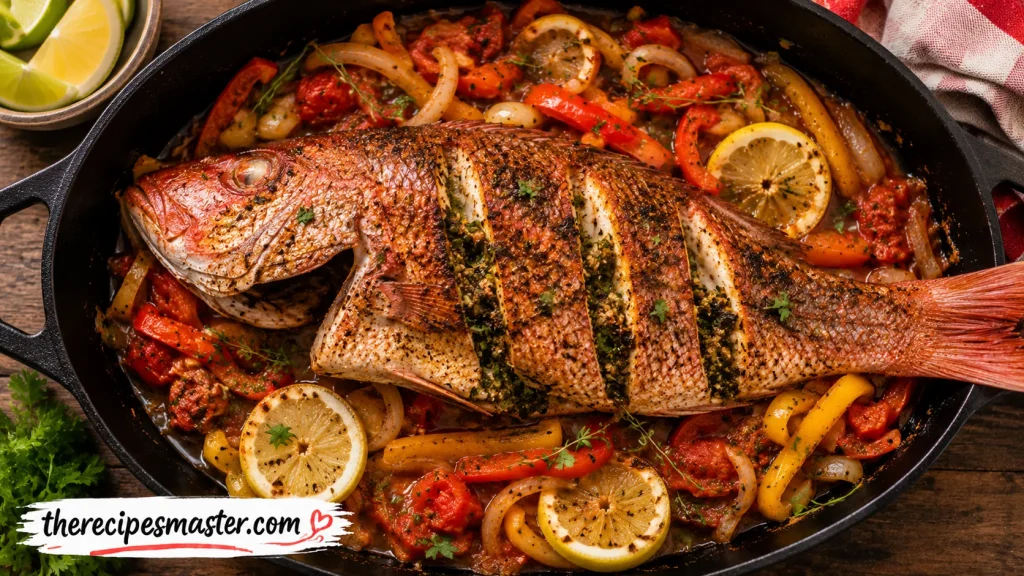
Ingredients for Whole Fish
Instructions
5 Sauces That Go Perfectly With Red Snapper Recipe
1. Lemon Butter Caper Sauce
This is the sauce in the main recipe above. Butter, garlic, lemon juice, and capers in the same pan. Takes 2 minutes and tastes like something from a restaurant.
2. Mango Cucumber Salsa
Dice 1 ripe mango, half a cucumber, half a red onion, one jalapeño, and fresh cilantro. Add lime juice and a pinch of salt. Fresh, sweet, and cuts through the richness of the butter beautifully.
3. Tomato Garlic Sauce
Sauté 4 garlic cloves in olive oil for 1 minute. Add one can of crushed tomatoes, dried oregano, salt, and a pinch of sugar. Simmer 10 minutes. A Mediterranean classic that works with any seasoning.
4. Chimichurri
Blend fresh parsley, fresh oregano, 4 garlic cloves, red wine vinegar, olive oil, red pepper flakes, and salt. No cooking needed. Bright, herby, and pairs with every seasoning variation listed above.
5. Just Lemon
A squeeze of fresh lemon juice over hot, buttery snapper is sometimes all you need. Do not overthink it.
What to Serve With Red Snapper
Rice Dishes
Vegetables
Starchy Sides
Wine Pairing
Red snapper pairs best with crisp, dry white wines that do not overpower the mild fish.
Red Snapper Nutrition Facts and Health Benefits
Red snapper is one of the healthiest fish you can eat. It is high in protein and low in saturated fat. If you are watching calories or following a high-protein diet, this fish fits perfectly.
| Nutrient | Per 6 oz Serving | % Daily Value |
|---|---|---|
| Calories | 218 kcal | 11% |
| Protein | 44g | 88% |
| Total Fat | 3g | 4% |
| Saturated Fat | 0.6g | 3% |
| Omega-3 Fatty Acids | 0.4g | — |
| Sodium | 96mg | 4% |
| Selenium | 74mcg | 105% |
| Vitamin B12 | 3.2mcg | 133% |
| Carbohydrates | 0g | 0% |
Key Health Benefits
Is Red Snapper Safe for Pregnant Women? Red snapper is listed as a “good choice” by the FDA for pregnant women. It is lower in mercury than tuna or swordfish. The FDA recommends 2–3 servings of low-mercury fish per week during pregnancy.
6 Common Mistakes That Ruin a Red Snapper Recipe
Mistake 1: Not Drying the Fish
Wet fish steams instead of sears. You will never get a crispy crust from a wet fillet. Pat completely dry before anything else.
Mistake 2: Pan Not Hot Enough
If the fish does not sizzle the moment it touches the pan, the pan is too cold. Let it heat properly before adding butter and oil.
Mistake 3: Moving the Fish Too Early
The fish will naturally release from the pan when the crust is ready. If it sticks, it needs more time. Forcing a flip breaks the crust and leaves the skin behind.
Mistake 4: Overcooking
Red snapper is done when the flesh turns from translucent to opaque and flakes when you press it with a fork. Overcooked snapper becomes dry and rubbery very quickly. Watch it carefully in the last minute.
Mistake 5: Using a Non-Stick Pan
Non-stick pans do not get hot enough to create a proper sear. Use cast iron or carbon steel for the best crust.
Mistake 6: Cooking Fish Cold From the Fridge
Cold fish in a hot pan means the outside overcooks while the inside is still cold. Take the fish out of the fridge 15 minutes before cooking.
Storage and Reheating Guide for Red Snapper
Storing Cooked Snapper
Storing Raw Snapper
How to Reheat Without Drying Out
Oven method (recommended): preheat to 275°F. Wrap fish loosely in foil with a small splash of water or broth. Heat for 10–15 minutes until warmed through. This keeps the fish moist.
Pan method: low heat with a little butter, covered with a lid about 3–4 minutes. Avoid microwave: it makes the fish rubbery and fills your kitchen with a strong fish smell.
Recipe Card
Red Snapper Recipe — Pan-Seared with Lemon Butter Sauce
Prep: 10 min | Cook: 15 min | Total: 25 min | Serves: 4 | Calories: ~340 per serving
Ingredients:
Instructions:
For gluten-free: use chickpea flour or rice flour. Substitute any firm white fish.
Frequently Asked Questions
Conclusion
Red snapper is one of the easiest fish to cook once you know the basics. Dry the fish well, get your pan hot, and leave it alone for four minutes. That is really all it takes to get that golden, crispy skin every time.
You now have five ways to cook it, six seasoning ideas, sauces, sides, storage tips, and answers to every question people ask about this fish. Whether you go with the simple lemon garlic version on a weeknight or the whole Caribbean-style fish for guests, the method stays the same. Pick one version, try it tonight, and see why red snapper recipe keeps coming back to the top of so many dinner tables.
If you’re a fan of mild, flaky fish, this mahi mahi recipe is worth trying next. Start your meal with a refreshing shrimp cocktail recipe as a starter.