
The Best Filet Mignon Recipe (Restaurant Quality at Home)
Filet mignon sounds scary to cook. It costs a lot. One mistake and dinner is ruined. I know that feeling. But here is the truth this cut is actually one of the easiest steaks to cook at home. You just need the right steps, a good pan, and a thermometer. That’s it.
This guide covers everything. What to buy. How to prep. Three cooking methods. Exact temperatures. Sauces, sides, storage. By the end, you will be able to make a perfect filet mignon recipe that tastes better than most restaurants and costs half the price.
What Is Filet Mignon?
Filet mignon comes from the beef tenderloin a long, thin muscle that runs along the backbone of the cow. Because this muscle does almost no work, the meat stays incredibly soft and tender.
Here is something most people don’t know: there are only two tenderloins per animal. That is why filet mignon is rare and expensive. You are not just paying for flavor you are paying for scarcity.
Unlike a ribeye, filet mignon has very little fat and almost no connective tissue. That means it does not need long cooking time to get tender. It cooks fast. And because there is no fat to render down, the seasoning and cooking method make a huge difference in the final taste.
One more thing filet mignon in the US is usually cut from the center of the tenderloin and weighs around 6 to 8 ounces. In Europe, cuts tend to be smaller around 3 to 4 ounces. If you want the smaller European-style cut, look for “Petite Filet Mignon” at your butcher.
This is a steak for special moments. Valentine’s Day, anniversary dinners, birthday celebrations any night you want something that feels truly good.
How to Buy the Best Filet Mignon
Before you even think about how to cook filet mignon, you need to start with a good cut. A bad cut cannot be saved by good cooking.
Check these important points:
Color: The steak should be a deep, rich red. If it looks pale or grayish, it has been sitting too long. Skip it.
Touch: Ask your butcher to handle the steak. Good filet mignon should feel soft almost like pressing a pillow. If it feels firm and stiff, the muscle is tight and the steak will not be as tender.
No silver skin: Look at the edges of the steak. If you see a thin, shiny white membrane (called silver skin), ask the butcher to trim it. Silver skin does not break down during cooking and makes the steak tough on the edges.
Thickness: Go for steaks that are at least 1.5 to 2 inches thick. Thin steaks overcook before they get a proper sear on the outside.
USDA Grade: If you see “Prime” on the label, that is the best. “Choice” is also very good and more affordable. Avoid “Select” for filet mignon it will be noticeably less tender.
Where to buy: A local butcher is always the first choice. They cut fresh and can answer your questions. If you don’t have a good butcher nearby, online meat companies like Omaha Steaks deliver quality cuts directly to your door.
Price: Expect to pay between $30 to $50 per pound. If you see filet mignon priced way below that, be skeptical about the quality.
Ingredients You’ll Need
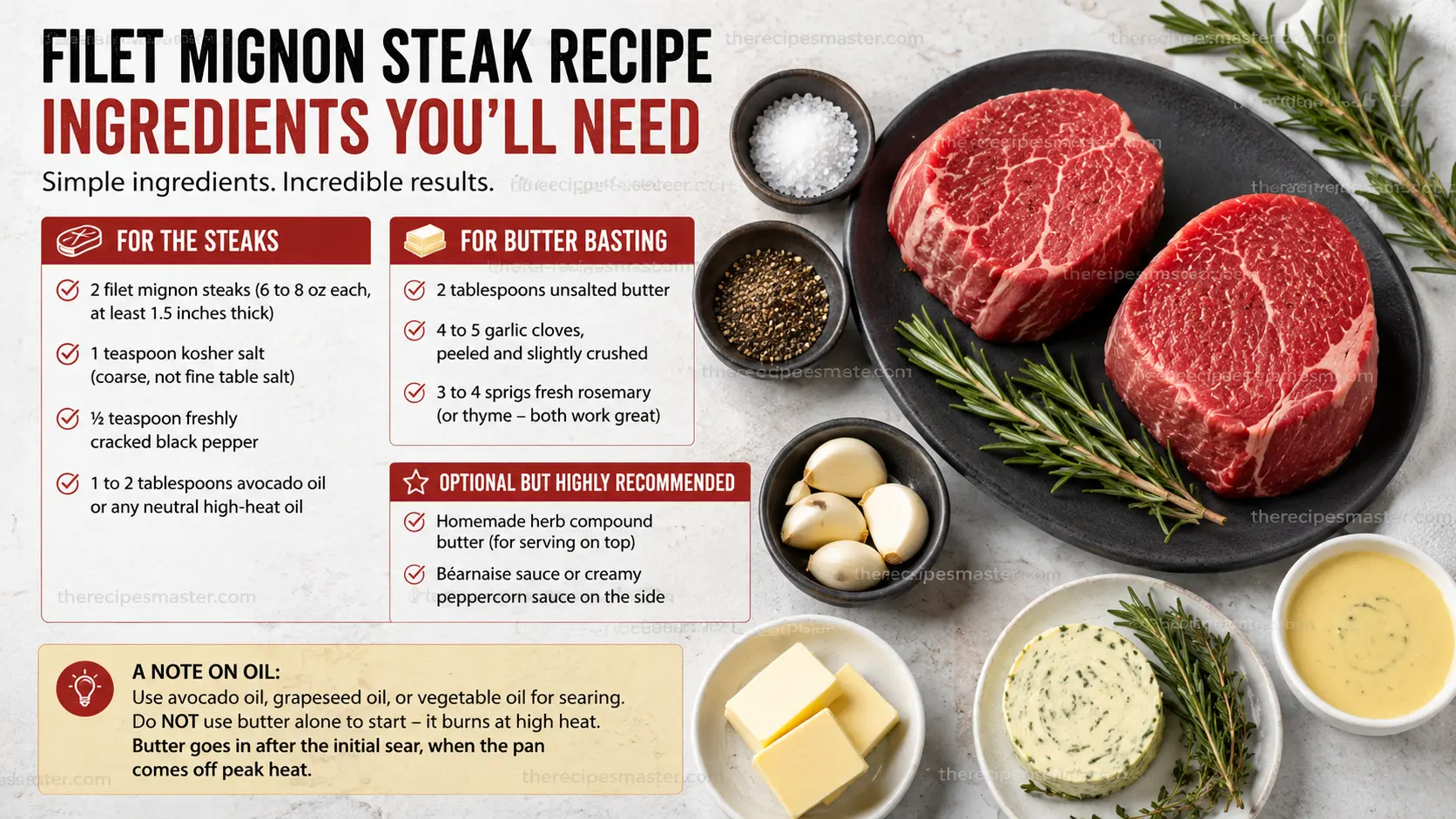
You don’t need a long list of ingredients for a filet mignon steak recipe. The meat does most of the work.
For the steaks:
For butter basting:
Optional but highly recommended:
A note on oil: use avocado oil, grapeseed oil, or vegetable oil for searing. Do NOT use butter alone to start it burns at high heat. Butter goes in after the initial sear, when the pan comes off peak heat.
How to Prep Filet Mignon Before Cooking
This step gets skipped a lot. Do not skip it.
Step 1: Bring steaks to room temperature
Take the steaks out of the fridge 30 to 60 minutes before cooking. Set them on a plate and leave them on the counter.
Why? A cold steak hitting a screaming-hot pan causes the muscle fibers to tighten fast. That leads to uneven cooking the outside gets overdone while the inside stays raw. Room temperature meat cooks evenly from edge to center.
Step 2: Pat them dry
This one small step makes a big difference. Use paper towels to pat both sides of the steak completely dry. Moisture on the surface creates steam in the pan, which prevents the crust from forming. No crust = no flavor.
Step 3: Season well
Season every side generously with kosher salt and cracked black pepper. Press it in with your fingers so it sticks. Don’t be shy with the salt it draws out a little moisture and then gets reabsorbed, seasoning the meat deeper than just the surface.
You can season right before cooking, or up to an hour ahead. Both work well.
How to Cook Filet Mignon ( 3 Methods )
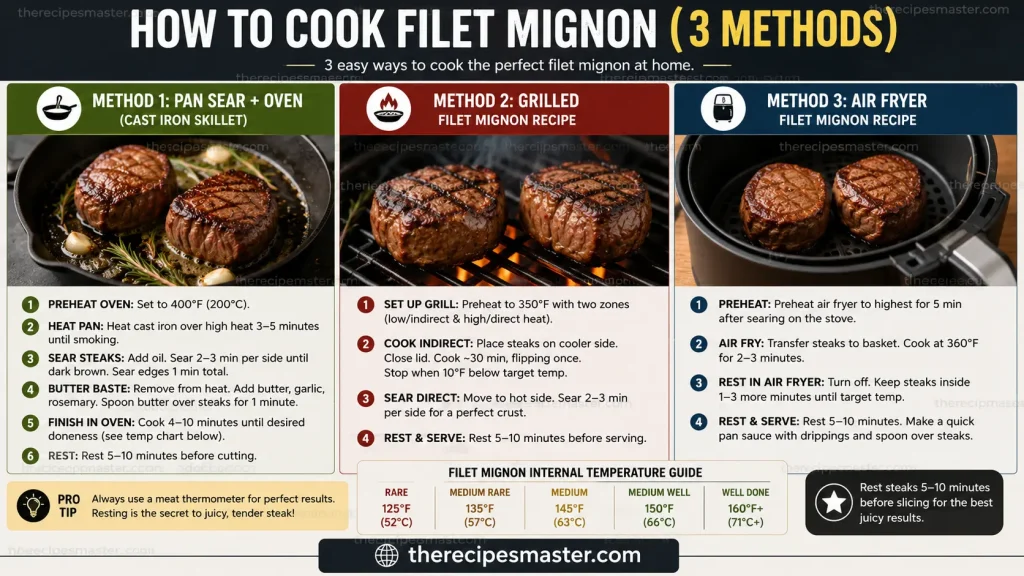
There are three ways to cook filet mignon at home. Method 1 (cast iron + oven) is the most popular for indoor cooking. Method 2 is for grill lovers. Method 3 is a quick option if you have an air fryer.
Method 1: Pan Sear + Oven (Cast Iron Skillet)
This is the filet mignon cast iron skillet method the one most home cooks and restaurant kitchens use. You get a hard sear on the outside and a perfectly cooked inside.
What you need: A cast iron skillet (or oven-safe stainless steel pan), meat thermometer, oven mitts.
Step 1: Preheat the oven Set your oven to 400°F (200°C).
Step 2: Heat the pan Place your cast iron skillet on the stove over high heat. Let it get very hot about 3 to 5 minutes. The pan should be smoking slightly before you add oil.
Step 3: Sear the steaks Add the oil. The second the oil shimmers, place the steaks in the pan. Do not move them. Sear for 2 to 3 minutes until a dark brown crust forms. You will know they are ready to flip when the meat releases from the pan on its own if it sticks, give it another 30 seconds.
Flip and sear the second side for 2 minutes. Then use tongs to hold each steak on its side edges for about 1 minute total this gives you a crust all the way around, not just top and bottom.
Step 4: Butter baste Take the pan off the burner. Add butter, garlic, and rosemary. The butter will melt and foam immediately. Using a large spoon, scoop the melted butter up and pour it over the steaks repeatedly for about 1 minute. This is the steak basting technique with butter that gives restaurant-quality flavor.
Step 5: Finish in the oven Put the pan in the preheated oven. Cook for an additional 4 to 10 minutes depending on how done you want the steak (see the temperature chart in the next section).
Step 6: Rest the steaks Pull the steaks out of the pan and put them on a plate. Cover loosely with foil. Rest for 5 to 10 minutes before cutting.
Method 2: Grilled Filet Mignon Recipe
A grilled filet mignon recipe gives you that smoky, char-grilled flavor you can’t get from a pan. This method uses two-zone cooking indirect heat first, then a final sear over direct flame.
Step 1: Set up your grill Preheat your gas or charcoal grill to around 350°F overall, with one side on low/indirect and one side on high/direct heat.
Step 2: Cook over indirect heat Place the steaks on the cooler side of the grill. Close the lid. Cook for about 30 minutes, flipping once halfway. This slow cook lets the beefy flavor develop all the way through.
Stop when the steaks are 10°F below your target temperature.
Step 3: Sear over direct heat Move the steaks to the hot side of the grill. Sear for 2 to 3 minutes per side to lock in the flavor and build the crust.
Step 4: Rest and serve Same as always 5 to 10 minutes of rest before serving.
Method 3: Filet Mignon Air Fryer Recipe
Short on time? A filet mignon air fryer recipe gives surprisingly good results.
Step 1: Preheat the air fryer at its highest setting for 5 minutes while you sear the steaks on the stove (same cast iron sear method as above).
Step 2: After searing, transfer the steaks to the air fryer basket. Cook at 360°F for 2 to 3 minutes.
Step 3: Turn off the air fryer but leave the steaks inside with the basket slightly open for 1 to 3 more minutes until they reach your target temperature.
Step 4: Rest and serve. Make a quick pan sauce using the leftover butter, garlic, and drippings in the skillet heat on the stove for 2 minutes and spoon over the steaks.
Filet Mignon Temperature Chart — Doneness Guide
A meat thermometer is not optional here. It is the single most important tool for this steak. Guessing by pressing the meat with your finger does not work reliably, especially for beginners.
Insert the thermometer through the side of the steak, not the top. This gives a more accurate reading at the center and leaves a cleaner presentation.
There are the filet mignon temperature targets. Pull the steak out of the oven when it is 5 to 10°F below these numbers it will continue cooking while resting (called carryover cooking):
| Doneness | Pull from oven at | Final rested temp | Color |
|---|---|---|---|
| Rare | 115°F | 120–125°F | Bright red center |
| Medium Rare | 120°F | 125–130°F | Deep pink (recommended) |
| Medium | 130°F | 135–140°F | Light pink |
| Medium Well | 140°F | 145–150°F | Slightly pink |
| Well Done | 150°F | 155–160°F | No pink at all |
Medium rare is the most recommended doneness for filet mignon. At this temperature, the texture is silky, the juices are still locked in, and you get the full flavor of the beef. Going past medium starts to tighten the muscle fibers and dry out the steak.
The USDA officially recommends 145°F as a safe minimum for beef, followed by a 3-minute rest.
Butter Basting — The Secret to Great Flavor
A filet mignon with garlic butter baste is what separates a good steak from a great one. Here is how to do it properly.
After the initial sear, take the pan off the heat and add your butter, smashed garlic cloves, and fresh rosemary. The butter melts almost instantly. Tilt the pan slightly so the butter pools on one side. Use a large metal spoon to scoop up that hot, garlicky, herb-infused butter and pour it over the steaks continuously.
Do this for about 60 seconds. The butter soaks into the crust, the garlic flavor gets pulled into the meat, and the rosemary adds a mild, woodsy perfume to the whole thing.
You can also finish by adding a slice of filet mignon herb butter made from softened butter blended with fresh basil, rosemary, and garlic directly on top of the rested steak. It melts slowly and creates a rich, savory coating.
For a next-level finish, try béarnaise sauce on the side. It is a classic steakhouse pairing and comes together quickly with butter, egg yolks, and tarragon.
Filet Mignon Seasoning — Simple and Spiced Options
The filet mignon seasoning recipe does not need to be complicated. Salt and pepper alone, used generously, are enough to make a stunning steak. The butter baste adds all the extra flavor you need.
Classic seasoning (recommended for beginners):
Spiced rub (for a bolder flavor):
The coriander adds a light, slightly citrusy pop that works beautifully with the natural sweetness of the tenderloin. The cayenne gives just a touch of heat at the back end.
Apply whichever seasoning you choose before the room-temperature rest. Press it firmly into every surface of the steak.
What NOT to season with: Skip seasoning salts, steak sauce before cooking, or anything with sugar. Sugar burns at the high temperatures needed for searing and will ruin the crust.
Sauce Options for Filet Mignon
A great steak deserves a great sauce. Here are a few options that go beautifully with filet mignon with butter sauce or any of the variations below:
Pan sauce (easiest): After removing the steaks, the pan still has all the browned butter, garlic bits, and steak drippings. Put it back on the stove over medium heat. Add a splash of red wine or beef broth. Scrape up all the browned bits. Cook for 2 minutes until it reduces slightly. Spoon over the steaks.
Creamy peppercorn sauce: Sauté shallots in butter, add crushed black pepper, pour in beef broth and heavy cream. Simmer until thick. This is rich, spicy, and absolutely delicious with filet mignon.
Red wine sauce: Reduce a cup of red wine with shallots and beef stock until it is thick and glossy. Stir in a tablespoon of cold butter at the end. A filet mignon with red wine sauce is a classic for a reason.
Mushroom sauce: Sauté sliced cremini mushrooms in butter, add garlic and thyme, deglaze with a little red wine or broth, finish with cream. A filet mignon with mushroom sauce is a steakhouse staple that works every single time.
Compound butter variations:
What to Serve with Filet Mignon
A great steak dinner needs the right sides. Here are the classics that always work:
Potatoes: Mashed potatoes are the #1 choice. They are creamy, filling, and soak up every drop of the pan sauce. Roasted baby potatoes and smashed potatoes with garlic also work very well. French fries, if you want to keep it fun and casual.
Vegetables:
Surf and Turf: Pair your filet mignon with a lobster tail. This combination is called surf and turf and it turns a great dinner into something truly spectacular for special occasions.
Wine pairing: A bold red wine is the natural choice with filet mignon. Cabernet Sauvignon is the classic pick — its tannins cut through the richness of the beef. Malbec is another great option, a little softer and fruitier. If you prefer white wine, a full-bodied Chardonnay can work with lighter sauces.
Pro Tips and Common Mistakes
Do these things:
Avoid these Mistakes
Storage and Reheating
Raw filet mignon: Keep in the fridge for 3 to 5 days. Cook while still very fresh for best results.
Cooked leftovers: Store in an airtight container in the fridge for up to 4 to 5 days. You can also slice the steak before storing it makes reheating and using in other meals easier.
Freezing: Let the cooked steak cool completely, then place in a freezer-safe bag with the air squeezed out. It keeps well for up to 3 months.
Reheating: Thaw overnight in the fridge if frozen. To reheat without drying the steak out, place it in a low oven at 250°F for about 20 to 25 minutes until warmed through, then sear quickly in a hot pan for 30 seconds per side to bring the crust back. The microwave works in a pinch heat in short 30-second bursts.
Leftover ideas:
Quick Recipe Card
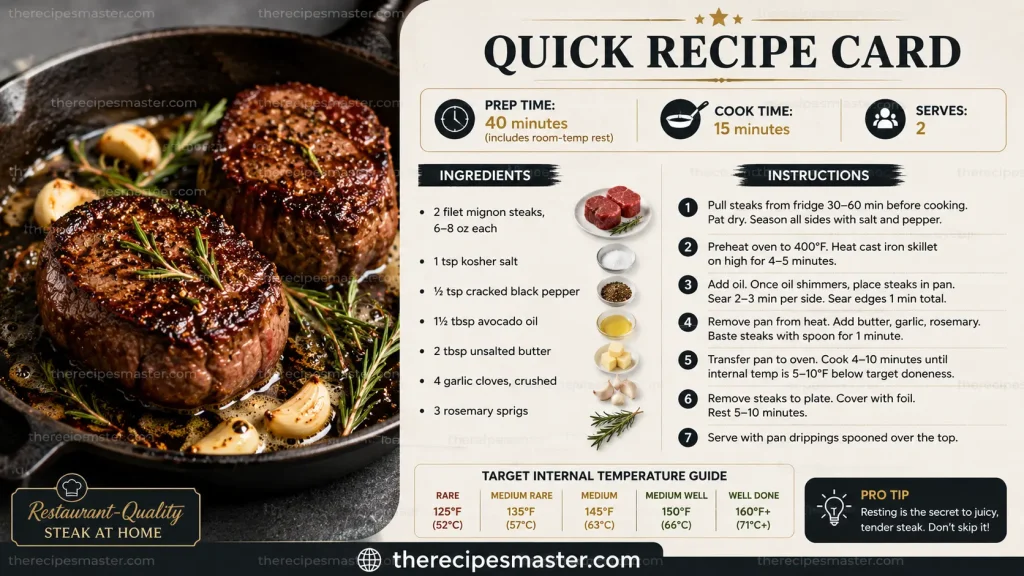
Prep time: 40 minutes (includes room-temp rest) Cook time: 15 minutes Serves: 2
Ingredients:
Instructions:
Frequently Asked Questions
Conclusion
Cooking filet mignon at home is not complicated. The cut itself is forgiving because of how tender it already is. What matters most is: good meat, room temperature prep, a screaming-hot sear, butter basting, and a proper rest.
Master those five things and you will never need to pay steakhouse prices again. A juicy filet mignon at home made in under 20 minutes of actual cooking beats most restaurant versions. Try it once and you will see exactly what I mean.
Hosting a dinner party? This cornish hen recipe is another elegant option for your table. If you want a spicier grilled dish instead, try this jerk chicken recipe.